| Members - Germany |
Moonbuggy-Pilotin Nadin Rößler wird heute 18
von Ralf Heckel, Vorsitzender, International Space Education Institute Leipzig
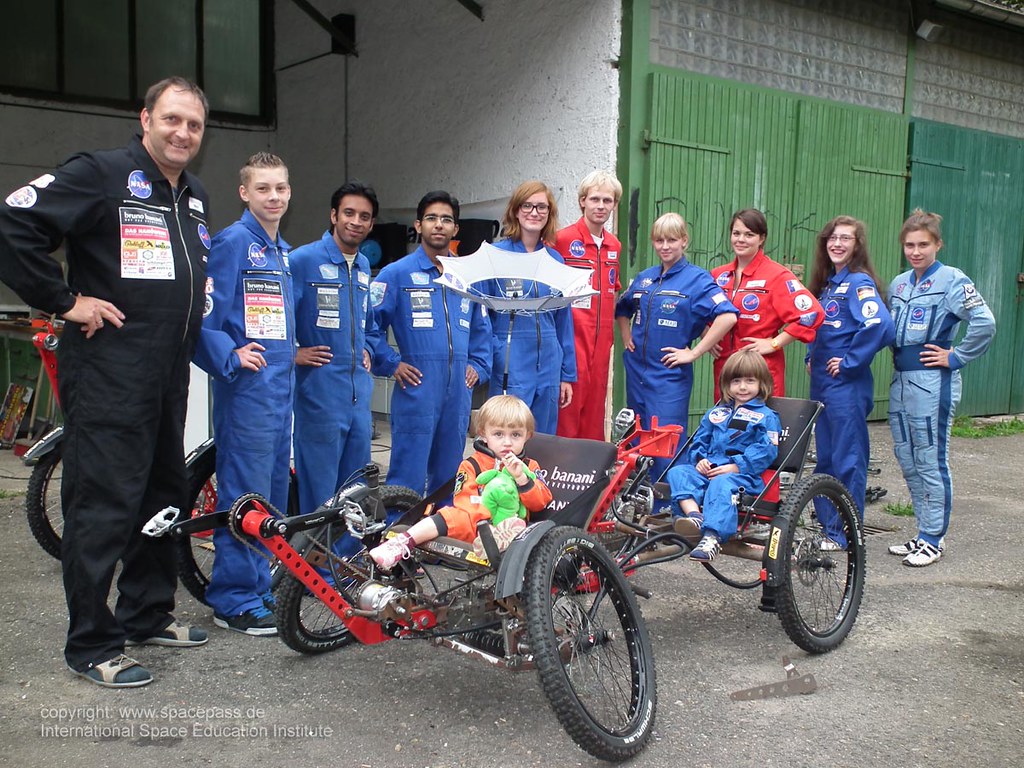
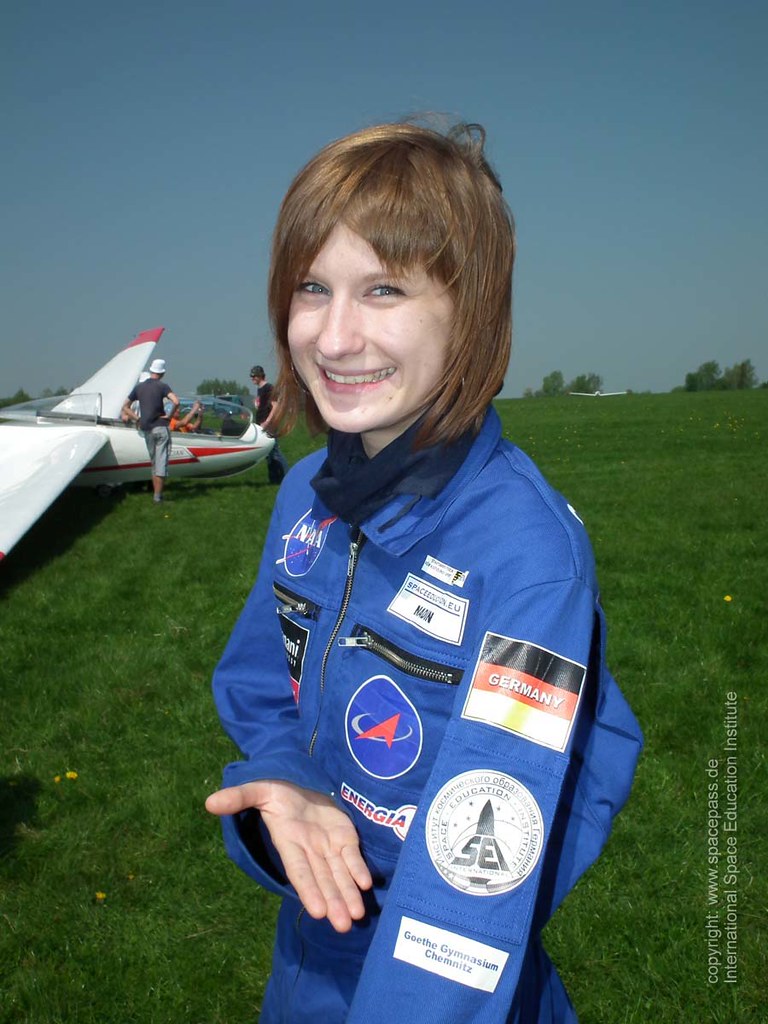 Sie ist eine Wissenschaftlerin durch und durch. Nadin stammt aus Chemnitz (Sachsen) und besucht in ihrer Heimatstadt das Johann-Wolfgang-Goethe-Gymnasium. Die Wissenschaft hat es der agilen Schülerin schon lange angetan. So besucht sie den Astronomiekurs in der Schule, arbeitet in freien Nächten in Sternwarten von Bekannten und kämpft sich beim NASA-Moonbuggy-Race als Pilotin an der Seite eines Profisportlers hoch.
Nadin will Physik/Mathematik-Lehrerin werden. Man könnte meinen, dass dies unerfüllte Träume sind. Wer aber genauer hinschaut, der spürt, dass die zierliche Nadin es faustdick hinter den Ohren hat. Sie lässt sich kein Ziel ausreden, arbeitet beharrlich daran und ist konsequent in ihrer Organisation. Als besondere Prüfungsaufgabe für das Abitur (BeLl, Propädeutikum) sucht sie sich schwere Themen heraus, vor welchen selbst manche gestandene Wissenschaftler respektvollen Abstand halten: "Nachweis von Exoplaneten". Nadin gelang im Sommer 2011 tatsächlich der Nachweis eines Planeten außerhalb des Sonnensystemes und erstaunte damit nicht nur die Astronomen der Region. Die Abiturprüfungskommission hat Nadin noch vor sich und diese darf sich dazu warm anziehen.
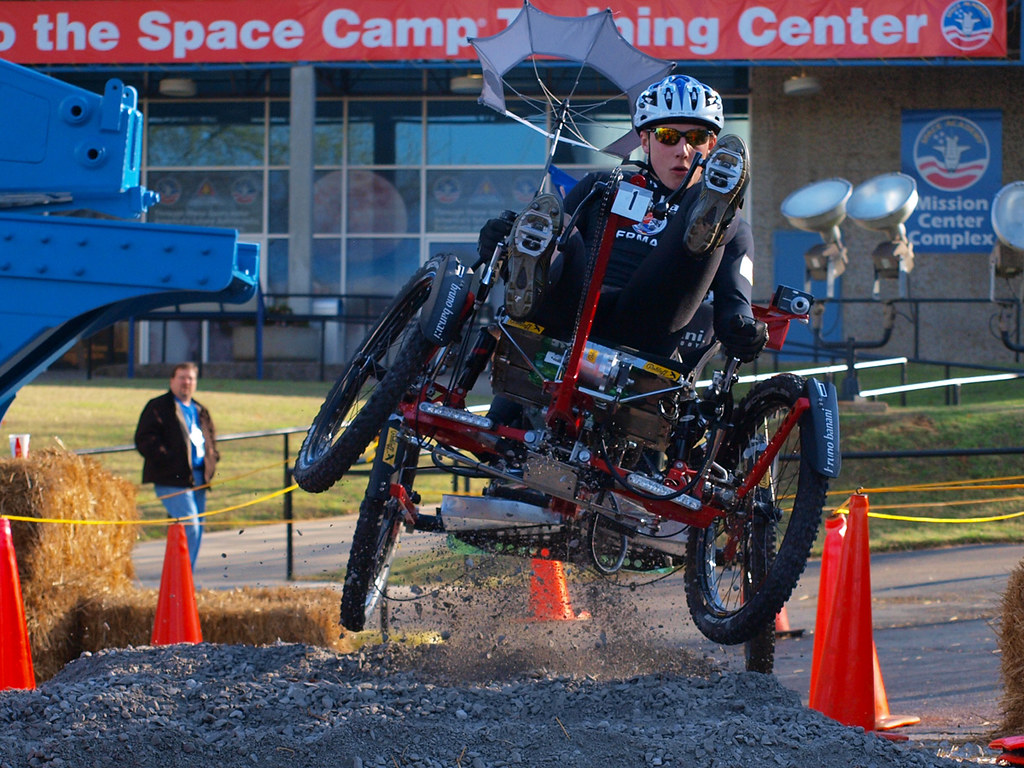
Beim NASA-Moonbuggy Race 2011 trat Nadin ordentlich in die Pedale und erreichte zusammen mit ihrem Fahrer Max Frank einen 5. Platz unter 80 Teams. Wohl war es weniger das Training, welches Nadin erst wenige Wochen vor dem Abflug begann, als vielmehr ihre Art sich und ein Hochleistungs-Team zu motivieren, auf ein Projektziel unter Berücksichtigung aller zwischenmenschlichen Feinheiten abzustimmen und für den Erfolg einzuschießen. Herzhaftes Lachen und durchdachte Schlagfertigkeit sind vor allem Nadins Stärken. Privat kümmert sich die Gymnasiastin liebe- und aufopferungsvoll um Familie, Freunde in Not und vor allem ihre kleine Schwester Susi.
Wir wünschen Nadin Alles Gute und weiter solch einen Blick in die Zukunft im weiteren Leben wie Schule, Beruf und natürlich auch der Liebe. "Erwachsen warst Du für die Mitglieder und Berater des International Space Education Institutes bereits schon vor diesem Geburtstag. Denn man kann Dir alles anvertrauen."
Nadins spektakulärstes Moonbuggyvideo
Geburtstagsgrüße absenden
Facebook
|
Saturday, 17 December 2011 01:00 | Written by Ralf Heckel |
There are no translations available. Raketenpionier Boris Tschertok gestorben
Autor: Ralf Heckel, International Space Education Institute
 Nachruf: Am 14. Dezember 2011 starb in Moskau der 99-jährige Raketenpionier Boris Tschertok an einer Lungenentzündung. Tschertok begleitete die russische Raumfahrt viele Jahre als Abteilungsleiter für Steuerung und Lenkung von Raketen. In seinem Wirkungsbereich arbeiteten bis zu 3000 Ingenieure und Wissenschaftler. Als Schuljunge sah Tschertok noch Lenin. Als Student erlebte er den Aufbau der Sowjetunion und baute selbst Segelflugzeuge die er mit Freunden in Koktebel an der Krim ausprobierte. Nachruf: Am 14. Dezember 2011 starb in Moskau der 99-jährige Raketenpionier Boris Tschertok an einer Lungenentzündung. Tschertok begleitete die russische Raumfahrt viele Jahre als Abteilungsleiter für Steuerung und Lenkung von Raketen. In seinem Wirkungsbereich arbeiteten bis zu 3000 Ingenieure und Wissenschaftler. Als Schuljunge sah Tschertok noch Lenin. Als Student erlebte er den Aufbau der Sowjetunion und baute selbst Segelflugzeuge die er mit Freunden in Koktebel an der Krim ausprobierte.Als junger Ingenieur verteidigte er als Entwickler in den ehemaligen Junkers-Flugzeugwerken Moskau sein Land. Nur wenige Kilometer trennten ihn von der Division der deutschen Armee vor Moskau, in welcher zuvor noch der spätere Apollo-Raketeningenieur Konrad Dannenberg (geb. in Weißenfels b. Leipzig) kämpfte. Zu diesem Zeitpunkt arbeitete Tschertok an Raketenflugzeugen zur Luftabwehr der Hauptstadt. Mit dem Vormarsch der Roten Armee nach Deutschland gehörte Tschertok zu jenen Ingenieuren, welche die ersten Überreste einer V2-Rakete im Versuchsgelände Heidelager und später Peenemünde zu verstehen versuchten. In Alter von 33. Jahren bezog er im Juni 1945 in Bleicherode im Harz die Villa Franke und gründete dort das Institut Raketenbau und -Entwicklung (RabE). Dort lernte er auch den späteren Sputnik-Chefkonstrukteur Sergej Koroljow und alle späteren Mitglieder des OKB-1 kennen. Darunter befanden sich der Sputnik-Sender-Entwickler Michail Ryazanski und der Raketentriebwerks-Entwickler Valentin Gluschko. 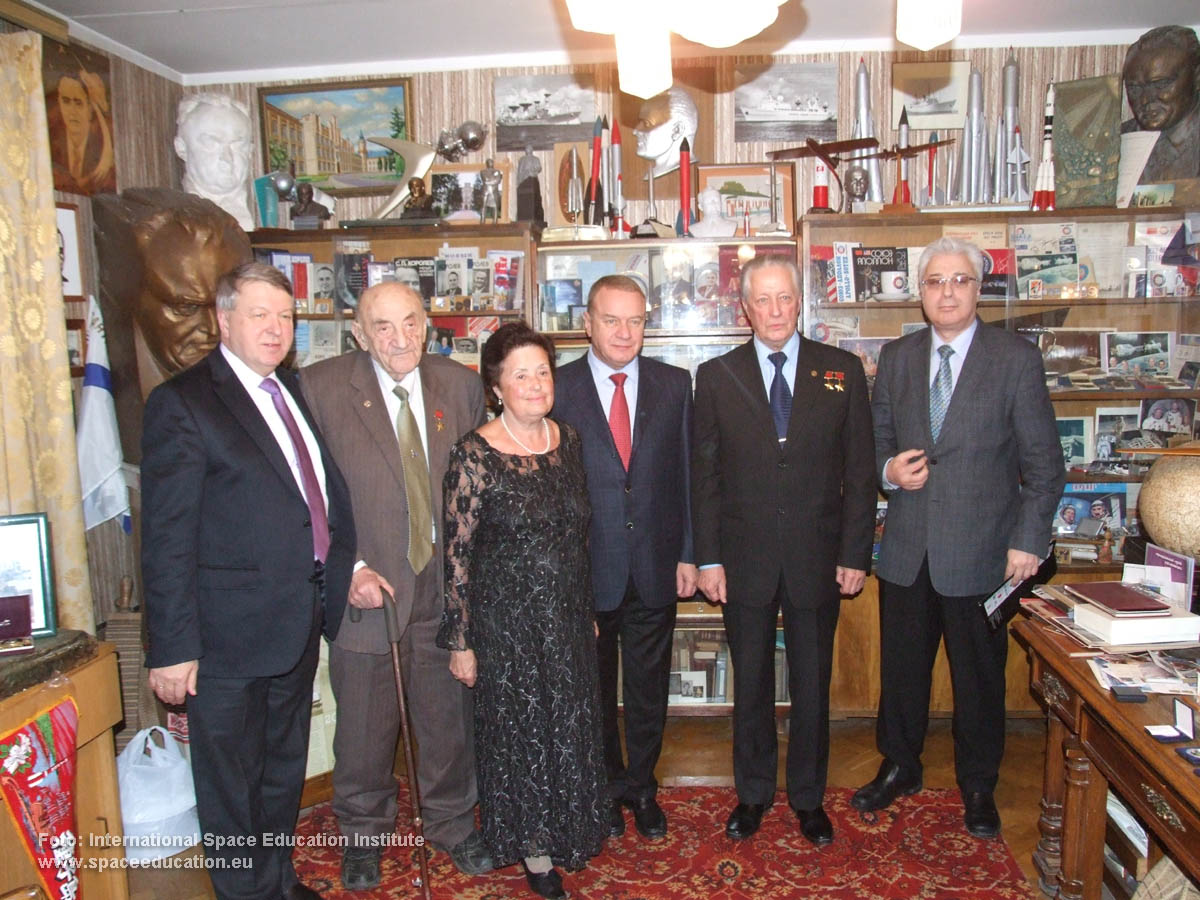 In den Folgejahren war Tschertok direkt an allen Pionierleistungen der russischen Raumfahrt beteiligt und lötete nicht selten selbst an den Raumfahrzeugen bis zur Startfreigabe. Die bekanntesten Leistungen sind: erster Satellit im All, erstes Foto von der Mondrückseite, erste Landung auf dem Mond, erste Rückkehr vom Mond, erster Mensch im All, erster Weltraumspaziergang. Aber auch viele Fernexpeditionen mit der Realisierung von Funkübertragungen über bis dahin unvorstellbare Entfernungen gehören seinen Verdiensten an. In den Folgejahren war Tschertok direkt an allen Pionierleistungen der russischen Raumfahrt beteiligt und lötete nicht selten selbst an den Raumfahrzeugen bis zur Startfreigabe. Die bekanntesten Leistungen sind: erster Satellit im All, erstes Foto von der Mondrückseite, erste Landung auf dem Mond, erste Rückkehr vom Mond, erster Mensch im All, erster Weltraumspaziergang. Aber auch viele Fernexpeditionen mit der Realisierung von Funkübertragungen über bis dahin unvorstellbare Entfernungen gehören seinen Verdiensten an.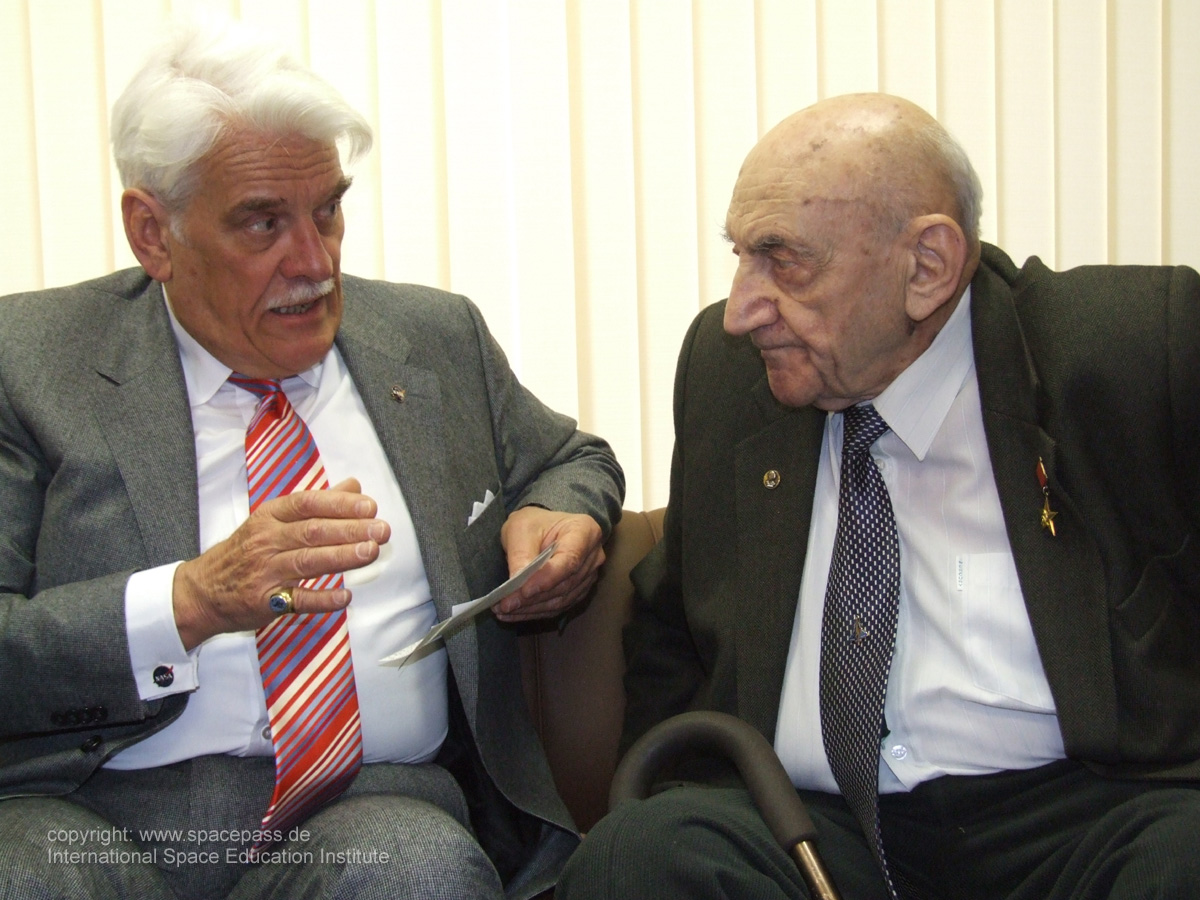 Tschertok 2007 im Gespräch mit Prof. von Puttkamer (NASA); Tschertok am 12.1.2011 zu Hause bei den Korolevs Tschertok 2007 im Gespräch mit Prof. von Puttkamer (NASA); Tschertok am 12.1.2011 zu Hause bei den KorolevsBis zum Tage seines Todes war Tschertok im aktiven Dienst als Ingenieur und Berater bei der Firma RKK Energia angestellt. Er war Vorsitzender der Koroljow-Lesungen, welche jedes Jahr an der Moskauer Baumann-Uni mit hochdotiertem Publikum durchgeführt werden (Foto: Tschertok im Gespräch mit NASA-Amtskollegen Prof. Jesco von Puttkamer, Jan. 2007). Noch im Januar 2011 konnten die Schüler des SEI aus Leipzig (Tobias Meier und Christoph Eibeck) ihn während einer Moskau-Expedition zur Feier des Geburtstages von Koroljow erleben. Bis zuletzt verlor Tschertok nie seine grundoptimistische Zuversicht als Entdecker neuer Welten. Das International Space Education Institute strengte in den letzten Wochen die Honorierung Tschertoks am Kennedy Space Center (Cape Canaveral) an. Dort ist sein Name seit dem 12.12.2011 neben dem seines langjährigen Freundes und Kollegen Koroljow in Stein gefräst. Diese Urkunde mit Foto wird am 12.1.2012 der Firma Energia in Moskau von der Leipziger Botschafterin für Raumfahrtausbildung, Yvonne Heckel, übergeben. Am 1. März 2012 wäre sein 100. Geburtstag gewesen. Tschertok schrieb 5 Bücher welche tiefe Einblicke in die russische Raumfahrt der Zeit des Kalten Krieges geben. Sie wurden vom Elbe Dnjepr-Verlag übersetzt und sind auch in der USA in englischer Sprache eine heiß begehrte Ware. Weitere Infos
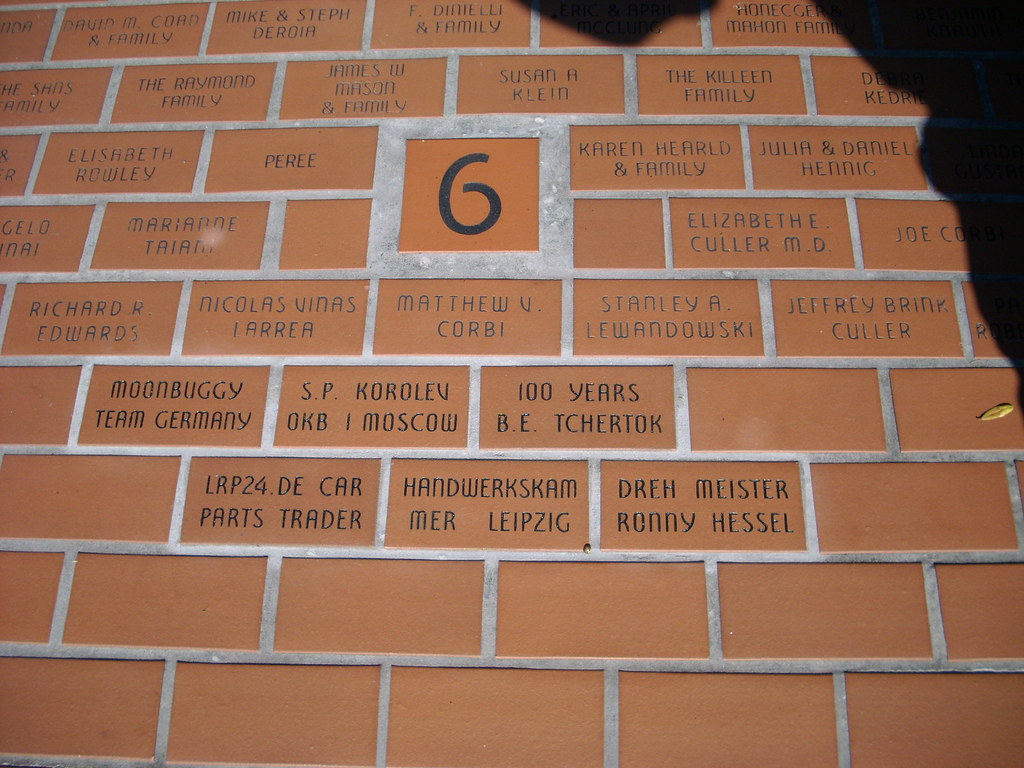 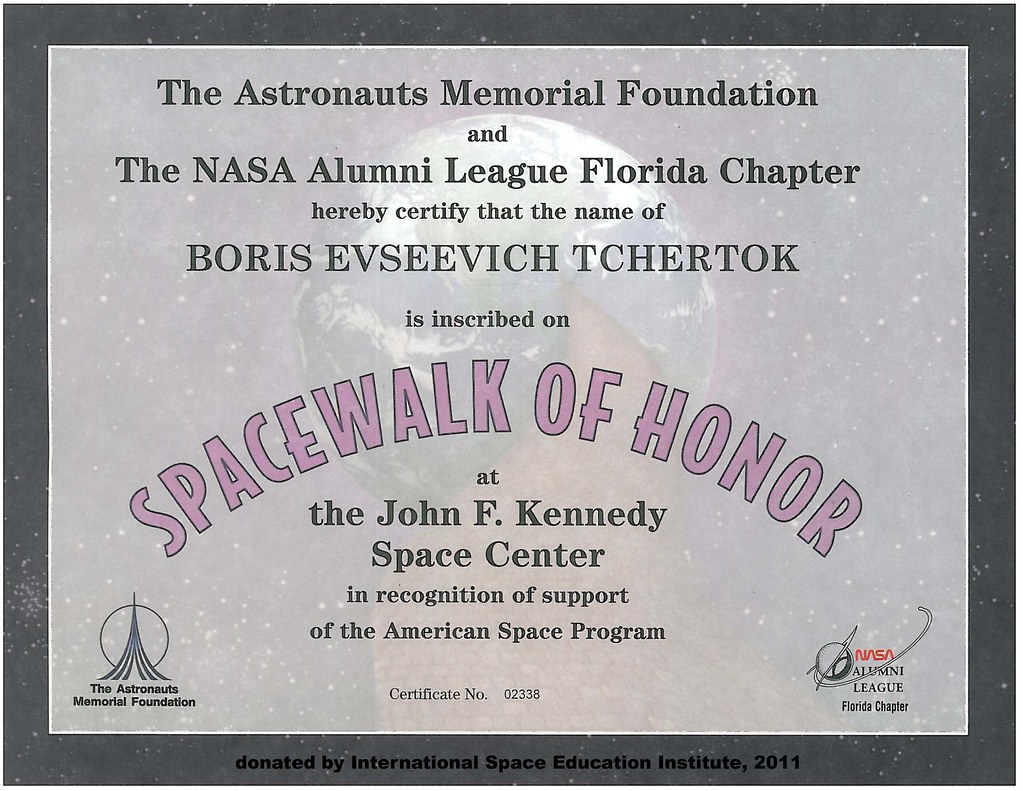 Boris Tschertok auf dem Spacewalk of Honor zusammen mit S.P. Korolev, seit 12.12.2011, Kennedy Center Visitor Complex Boris Tschertok auf dem Spacewalk of Honor zusammen mit S.P. Korolev, seit 12.12.2011, Kennedy Center Visitor Complex
Saturday, 13 August 2011 09:10 | Written by Ralf Heckel |
Leipzig’s cycling track hosts young engineering hot shots on August 19th Leipzig/SEI, August 12th, 2011
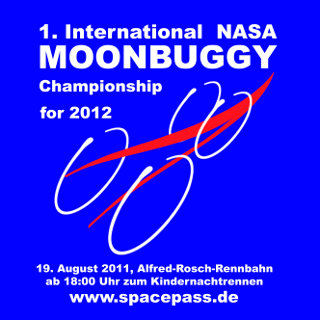
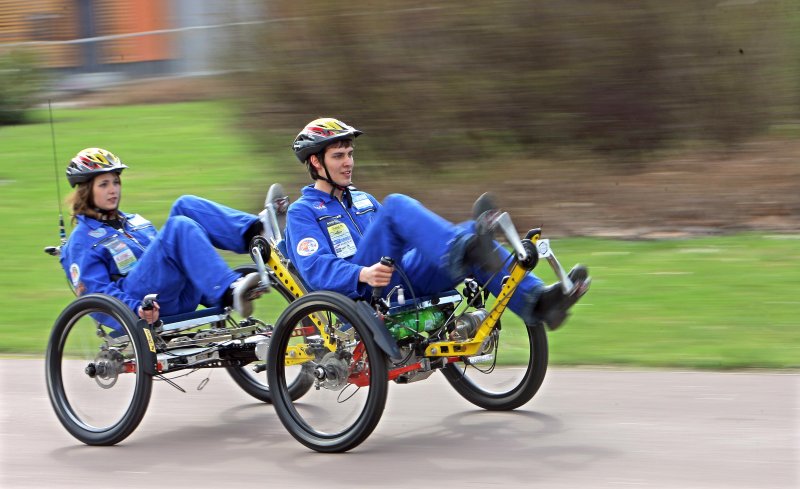
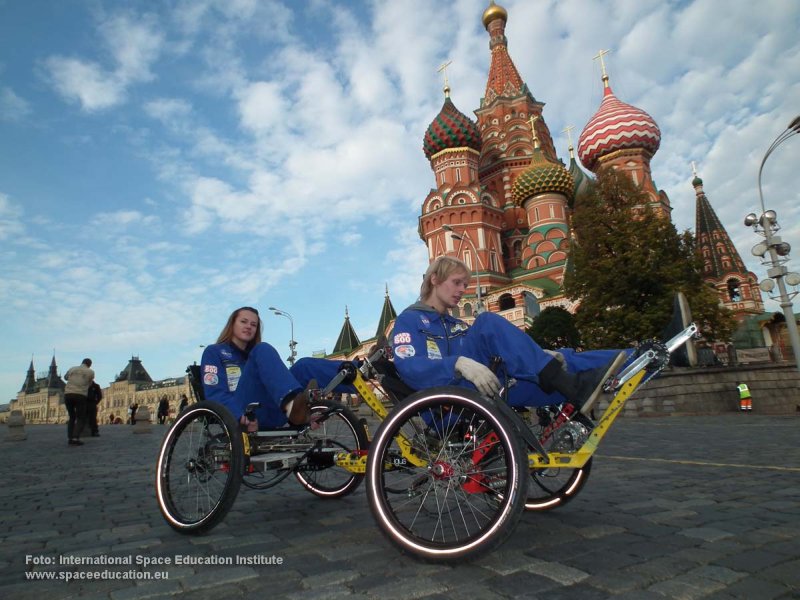
The Moonbuggy might not be going to the Moon just yet, but it’s still simulating the challenges of a career at the cutting edge of industry, science and craft – not to mention enthusiasm, health and sports. Next weekend, 4 international Moonbuggy teams from Germany, Russia, India and France will be battling it out in Leipzig to compete for the cup of international NASA teams. Leipzig’s race track is the ideal venue for the recumbent bikes that are speeding up to 80km/h before the annual Children’s Night Race takes off from 6pm. But there’s more to it.
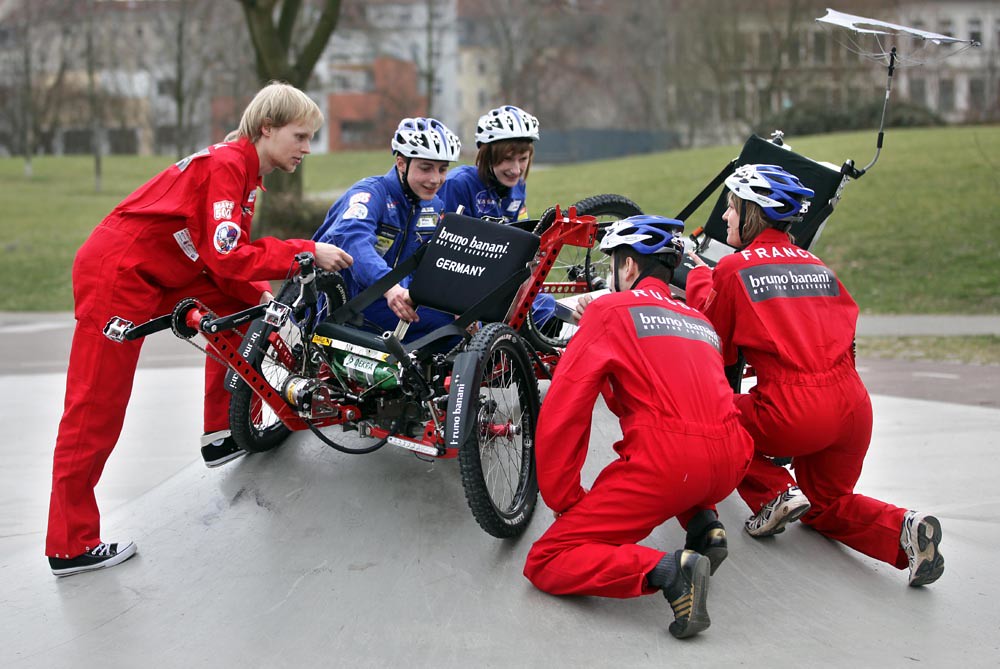
For 5 years the Leipzig-built Moonbuggy has been taking part in the eponymous NASA construction competition. It was the first non-US built vehicle and earned the winning team last year – this year, there were even two vehicles that finished 4th and 6th across the pond. At the same time, 48 Indian teams started at NASA, but none of them finished better than 17th. It’s the same for teams from universities and high schools in Russia, Canada, Romania, Hungary, Malaysia, France and others. So far, no other international educational establishment has been able to inspire and push their students as far as Leipzig’s International Space Education Institute e.V. did. Sahil Sehgal (22) from New Delhi holds a Master in information technology and was quick to join the first International Summer School in Leipzig. ‘Quality instead of quantity’ was his motto while he spent time in a multidisciplinary team. Yevgeny Sakutin (22) hails from the Urals and finished his aerospace studies as the most distinguished student in his Moscow Aviation University. This summer is his 4th time in Leipzig, and he feels it’s natural to learn abroad and then pass his experience on to his Russian peers in industry and academia. Laurence Ponsot (19) studies engineering in Lyon. She wonders why a high tech nation such as France has not fared better in such an important youth competition, but points out: ‘In Leipzig I found a family you can reach anything with.’
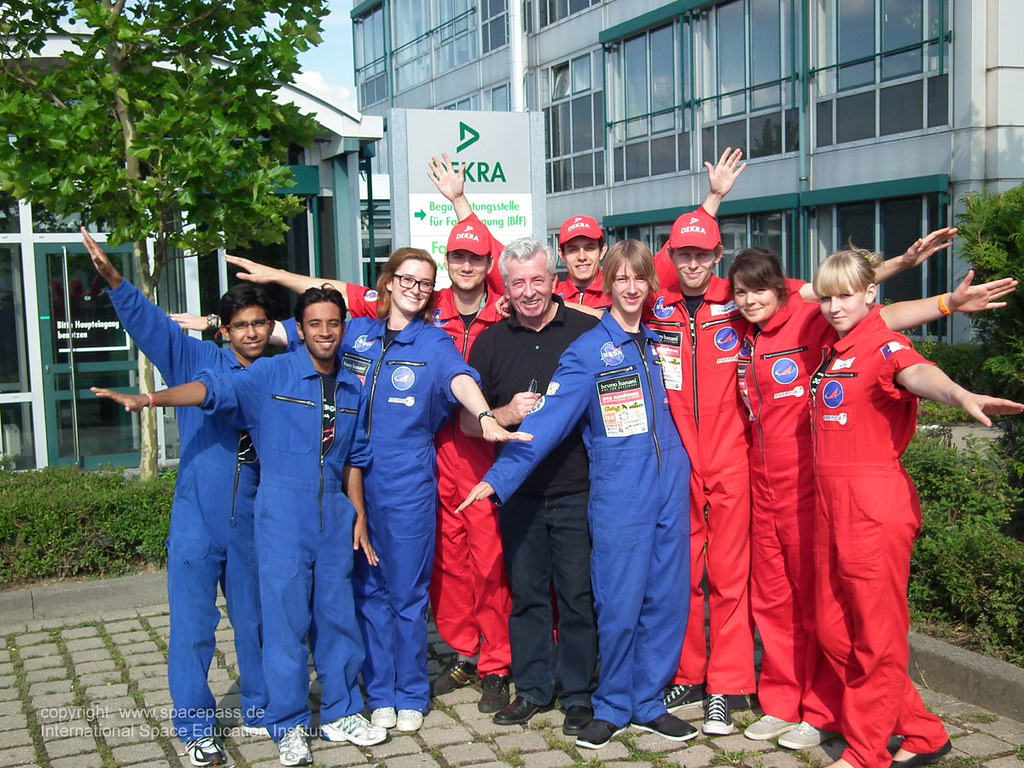
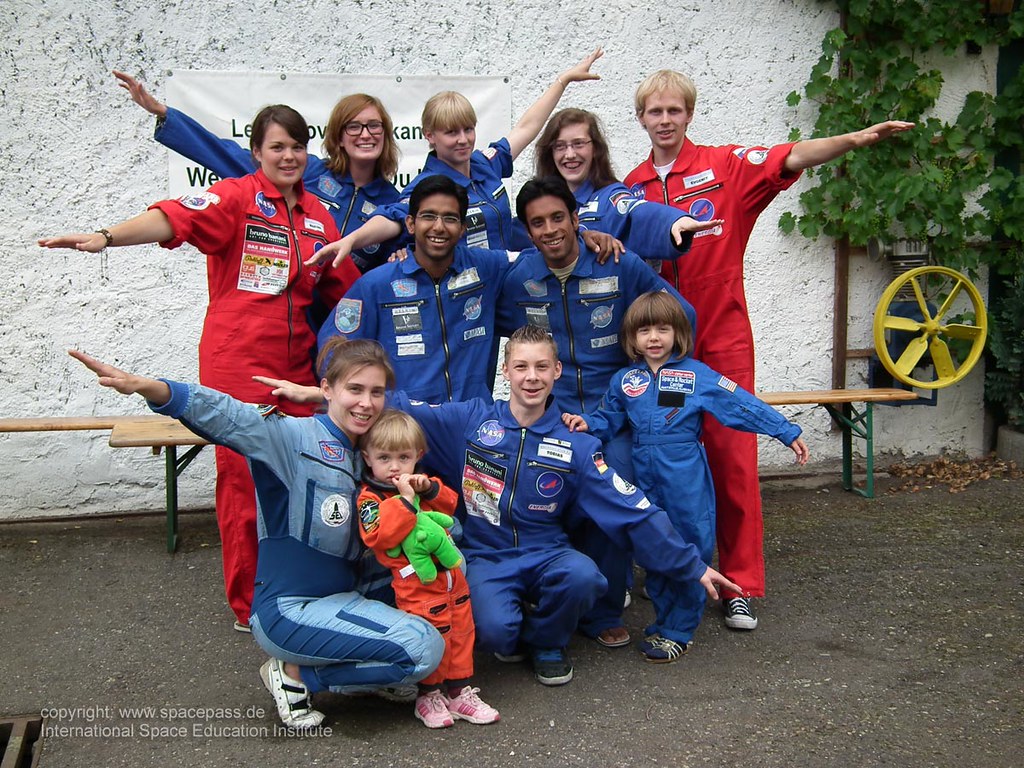
All those international students – 25 by now – have only one goal: ‘To give our best at the first international championship in Leipzig’. But what makes Leipzig so attractive? Dr. Eberhard Rees, 2nd director of NASA’s Marshall Spaceflight Center during the 1970s, studied and worked in Leipzig as a young man. His boss in the Lindenau-based company Meyer & Weichelt, Dr. Curt Weichelt, founded the association of the friends of the commercial college and developed young talents during the 1920s. Today, Marshall Spaceflight Center in the rocket city of Huntsville Alabama is the host of the NASA Moonbuggy Race. Today’s SEI is the same kind of hotbed for talents as Weichelt’s brainchild was then. Some of those that profit most from this international exposure are the regional German students. Tobias Meier (15) of Portitz high school, Eric Meinel (15) of Kant grammar school or Nadin Rößler of Chemnitz’s Goethe grammar have long crossed the boundaries to the international engineering world and are already on the way to the top. As successful cyclist, Max Frank (17) has found a new goal: ‘The Moonbuggy deserves to be turned into a sport and leisure activity’.
Big goals need a big arena – as they are our future. Our great thanks go to all participants, including the hosts of the Children’s Night Race and all regional companies who find their heart in this idea. More information for students, pupils and parents: Tel: +49 (0) 172 7949 375 Ralf Heckel, Chairman
Saturday, 23 July 2011 07:34 | Written by Administrator |
Leipzig, 21.07.2011 Translated by Lea Mork
Interested in age from 12-19 years are especially welcome and can register to a unit at:
Wednesday, 30 March 2011 11:58 | Written by Administrator |
Ralf Heckel, International Space Education Institute If, in future, we want to settle the moon and the planets as we live in orbit right now, we’ll need to be willing to swap nationality against an ‘earth-citizenship’. Exploring space is the task of humanity as a whole. It may be pioneered by several nations at first, but at the end of the day we’ll all have to be prepared to work together smoothly to discover the new. Each captain needs a crew. Great achievements are therefore only possible in a team, with impeccable excellence and consideration for safety, above all. These are the core values of NASA and the house rules of ISS. And I love them – thank you, America! Last year, 2010, we scored the best time in the Moonbuggy Race. For a long while afterwards we didn’t really realize what that meant. The success was such a surprise that each of our team was unprepared. Afterall, it’s only 1 second of a difference – not more, and not less. But it was pivotal. And the Moonbuggy by the team of Fajardo Vocational High School (PR) and ours couldn’t be more different. That single second showed that many ways lead to success. Thank you, Puerto Rico, fort his experience!
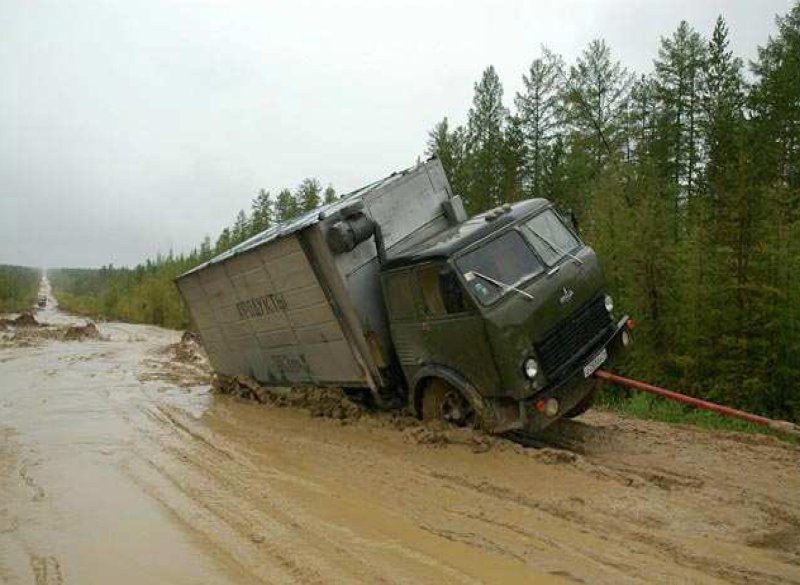
An absolutely surprice was the speedrecord of our pilots. For a short time at the training in Huntsville, our buggy drove a speed of 50 mph (80 km/h). Thank you Stefan and Steffi for this great power. Since our first international participation 5 years ago, it’s become increasingly vital for us also to inspire other nations for the Moonbuggy Race. The Moonbuggy has a great future if it goes multinational. Nothing is as self-evident as to do this in Russia, Europe’s strongest space nation. Our nations, US – Germany – Russia, have a common historic core. This is where space exploration began. German engineers were also working in Russia on the rockets for Sputnik and Gagarin – like the ‘Von Braun-Team’ in Huntsville. That’s why we drove ten thousands of kilometers through Russia with the students and their Moonbuggy. There were already two races in Russia and a number of talks. The word ‘Moonbuggy’ – or subtly adapted, ‘lunar buggy’ – is now part of the Russian vocabulary. Now we’re having a little break from the Russian roads, as they couldn’t be worse on the Moon. Man and machine did their best during this east-bound roadshow – they’re well prepared now!
It is therefore with great pleasure that I’m presenting two Russian teams in 2011, this special year. One team is driving under our support. Another team initially trained with us, but now want to be in competition. We’re really excited.
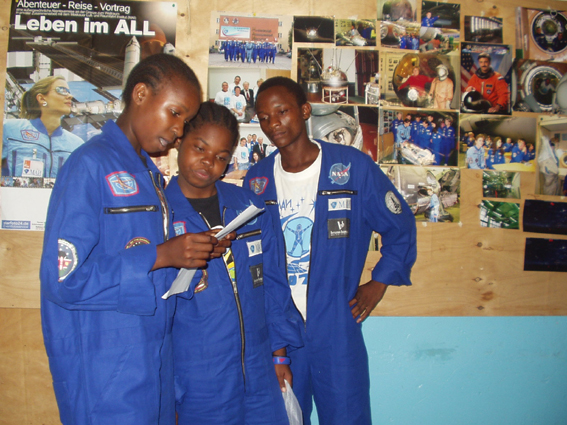
A big respect goes to the first team from Africa. 3 years long we supported a school on Kenya and showed them a Moonbuggy. 1200 students in Kilifi near Mombasa ware excited. But there is no electrical power, no water and no toilett and a very slow internet. First we built a restroom for all. So it is a great surprice to know a team from Ethopia at the Moonbuggy Race. Welcome Africa!
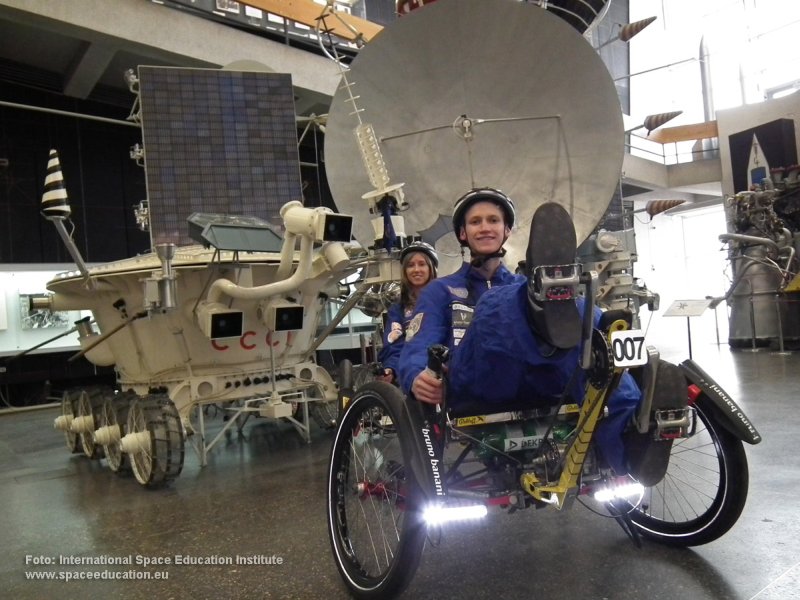
Why there is so much enthusiasm this year, I’d like to explain too. Just like in America, Russia celebrates 40 Years of the Lunar Rover. ‘Lunokhod 1’ was an automatic rover that landed on the Moon even a bit earlier than LRV. It took 20,000 photographs, 200 films and covered around 7 miles on the Moon. We visited Lunokhod with our Moonbuggy and we can bring along its chief designer and telemetry pilot. In addition to that, April 12th, only 10 days after the Moonbuggy Race 2011 will be a double anniversary again: That’s 30 years Space Shuttle and 50 years Gagarin’s flight. Both are firsts and ground-breaking achievements. They’re based on excellence, integrity and team spirit. I’m convinced this is what you’ll all be bringing to the race.
Give your best!
Links:
Russian Team TV: Press: translated by Regina Peldszus, space hability designerin, Kingston University London
|