| Education - Summer school |
Translated by Lea Mork
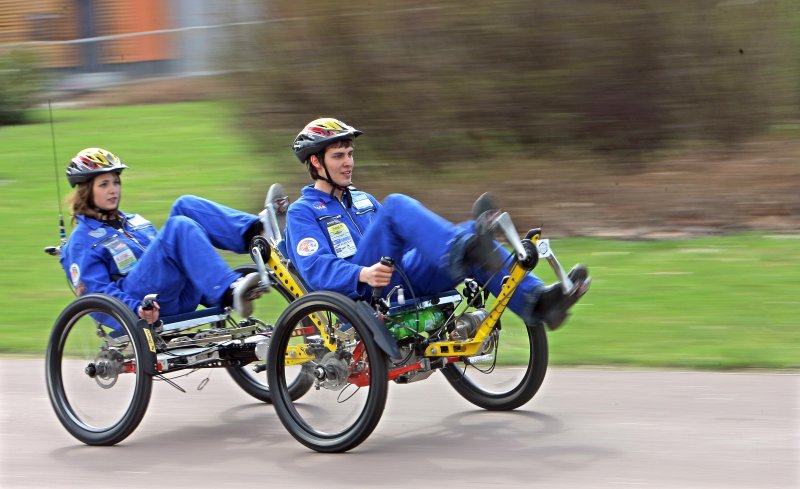
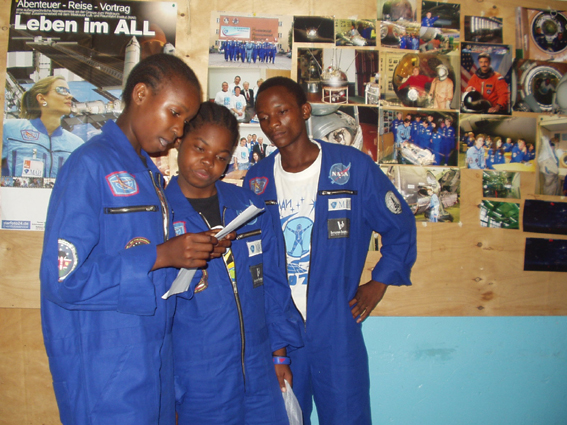
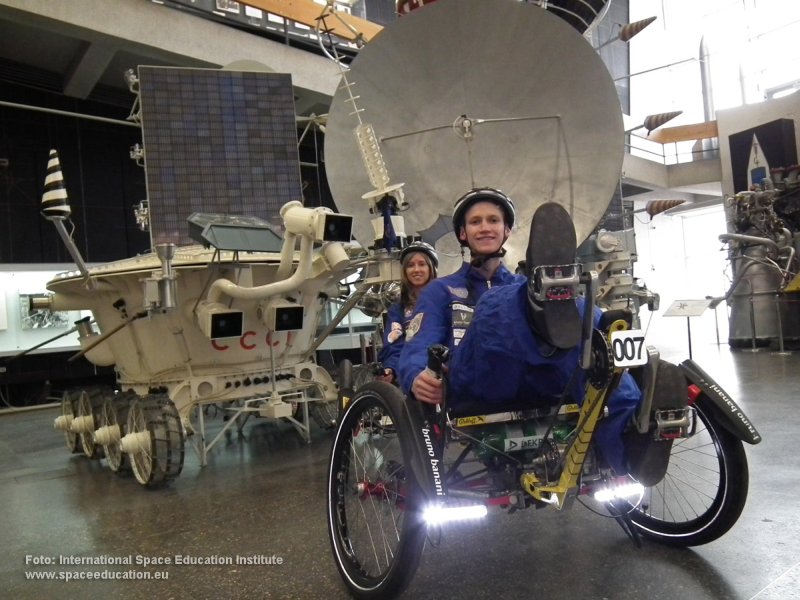
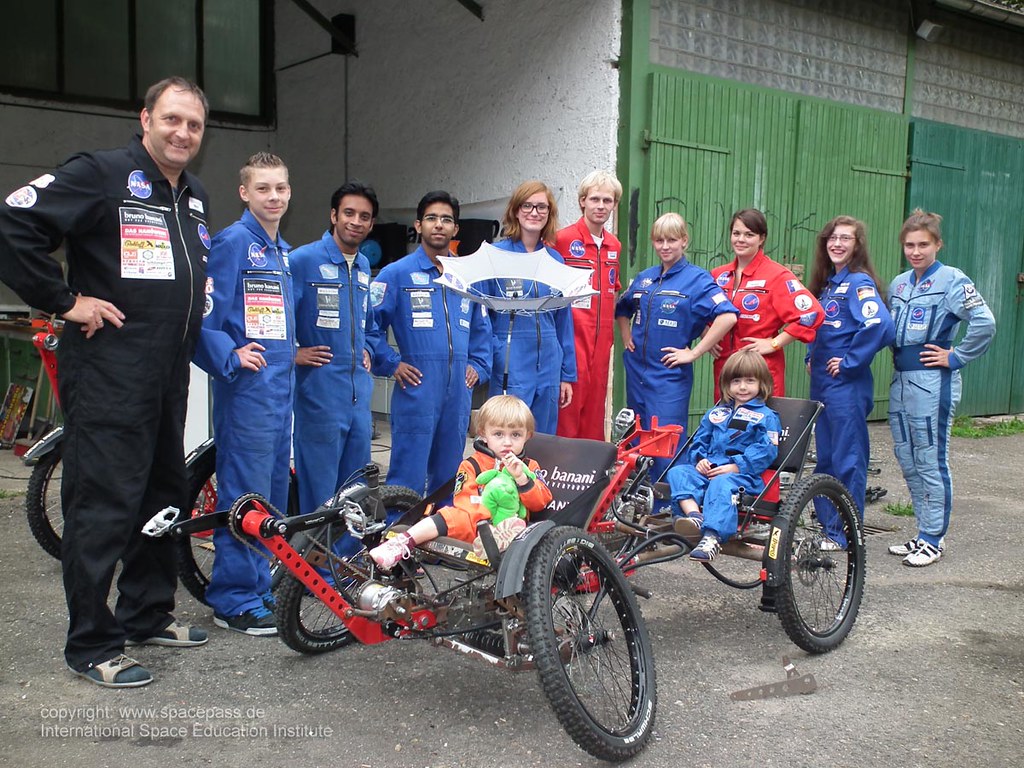 The first group of international aviation and aerospace students begins now the first summer school in Leipzig. The 17 students from Germany, France, Russia and India are preparing the European Championship in NASA Moonbuggy Race in the International Space Education Institute. 12 other participants from India are expected. The International Space Education Institute has, with its inventor workshops and the space hotel for the club's home of these young international rushed. The participants absolve many different courses from handiwork over engineering to programming. These courses are supported in the Community through collaboration much integrity and ethical values. So the Founders want to remember to the history of the space scientists in Leipzig since 1807.
 This club leads in many disciplines of international competitions to career building society has become like many young explorers visited Address. The young participants create new moonbuggies for the NASA competition and test them out on the Rabet in the east of Leipzig and prepare the first international championship on 19 Moon Buggy August at the Alfred-Rosch-Kampfbahn. The ultimate goal of researchers is the design and construction of an electrically-powered rover for the Mars 500 project in Moscow and a small series production of the Saxon moonbuggies as hands-on environmental project for schools and vocational orientation and crafts. Practice, experience and multilingual use in various languages as well as learn about the different cultures and mentalities is a valuable byproduct for the participants during the summer teamwork in a relaxed atmosphere.
 So the student get special experiences and get special knowledge. And this knowledge is paired with Leipzig handicraft and Saxon perseverance. This is very profitably for the highschool students of Leipzig. In the coming school year, a wide range of opportunities for internships will be available for this students.
The Leipzig Space Summer School is supported by the German Embassy in Moscow, Leipzig and handiwork, Bruno Banani, the Ministry of Culture and Sports of Saxony and a number of international scientists from USA, Germany, Russia and India. Only in passing the club also conveys the many requests for the landing of the Space Shuttle at NASA scientists have paved the way for the next generation.
Interested in age from 12-19 years are especially welcome and can register to a unit at:
www.spaceeducation.eu
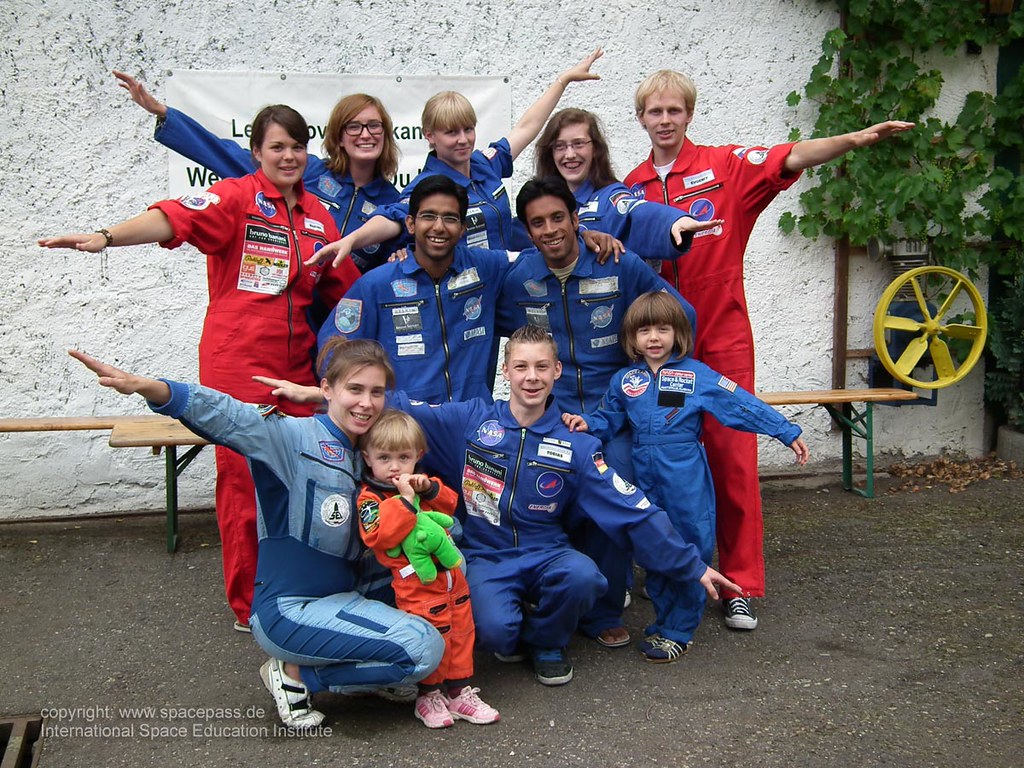 Participation is subject to diligence, precision, teamwork and integrity. The team is on Saturday morning to the public for questions and photos.
Date: 19. August 2011, 18 Uhr, International Moonbuggy Championchip, Alfred-Rosch-Kampfbahn, Leipzig
Members of the first group:
|
Vorname |
Nachname |
Land |
Stadt |
||
|
1 |
Max |
Frank |
Germany |
Barkum |
|
|
2 |
Tobias |
Meier |
Germany |
Leipzig |
|
|
3 |
Eric |
Meinel |
DGermany |
Leipzig |
|
|
4 |
Lea |
Mork |
Germany |
Hamburg |
|
|
5 |
Nadin |
Rößler |
Germany |
Chemnitz |
|
|
6 |
Frederike |
Weber |
Germany |
Meissen |
|
|
7 |
Marine |
Boyer |
France |
Toulouse |
|
|
8 |
Laurence |
Ponsot |
France |
Lyon |
|
|
9 |
Abhinandan |
Roychowdhury |
India |
Neu Delhi |
|
|
10 |
Sahil |
Sehgal |
India |
Neu Delhi |
|
|
11 |
Sergey |
Bashlykov |
Russia |
Ufa |
|
|
12 |
Alexander |
Frolov |
Russia |
Moskau |
|
|
13 |
Vladimir |
Kuznetcov |
Russia |
Tujmazy |
|
|
14 |
Luisa |
Shafigulina |
Russia |
Ufa |
|
|
15 |
Roman |
Tarasov |
Russia |
Moskau |
|
|
16 |
Evgeniy |
Zakutin |
Russia |
Komi Rep. |
|
|
17 |
Victoria |
Zakutina |
Russia |
Komi Rep. |
|
|
|
|
|
|
|
|
Wednesday, 30 March 2011 11:58 | Written by Administrator |
Ralf Heckel, International Space Education Institute If, in future, we want to settle the moon and the planets as we live in orbit right now, we’ll need to be willing to swap nationality against an ‘earth-citizenship’. Exploring space is the task of humanity as a whole. It may be pioneered by several nations at first, but at the end of the day we’ll all have to be prepared to work together smoothly to discover the new. Each captain needs a crew. Great achievements are therefore only possible in a team, with impeccable excellence and consideration for safety, above all. These are the core values of NASA and the house rules of ISS. And I love them – thank you, America! Last year, 2010, we scored the best time in the Moonbuggy Race. For a long while afterwards we didn’t really realize what that meant. The success was such a surprise that each of our team was unprepared. Afterall, it’s only 1 second of a difference – not more, and not less. But it was pivotal. And the Moonbuggy by the team of Fajardo Vocational High School (PR) and ours couldn’t be more different. That single second showed that many ways lead to success. Thank you, Puerto Rico, fort his experience!
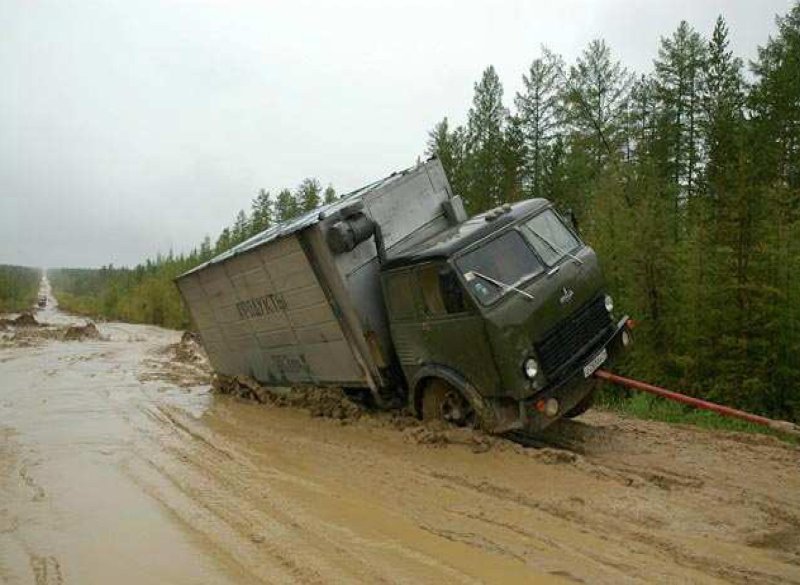
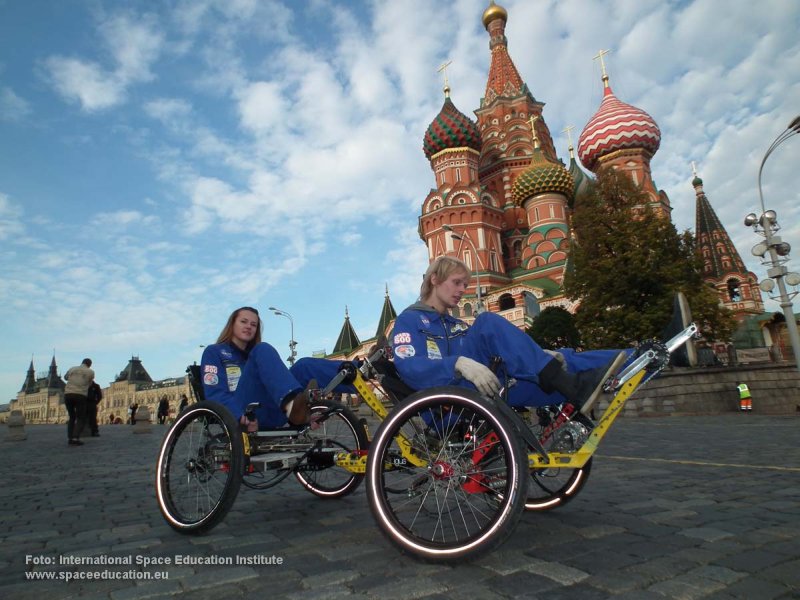
An absolutely surprice was the speedrecord of our pilots. For a short time at the training in Huntsville, our buggy drove a speed of 50 mph (80 km/h). Thank you Stefan and Steffi for this great power. Since our first international participation 5 years ago, it’s become increasingly vital for us also to inspire other nations for the Moonbuggy Race. The Moonbuggy has a great future if it goes multinational. Nothing is as self-evident as to do this in Russia, Europe’s strongest space nation. Our nations, US – Germany – Russia, have a common historic core. This is where space exploration began. German engineers were also working in Russia on the rockets for Sputnik and Gagarin – like the ‘Von Braun-Team’ in Huntsville. That’s why we drove ten thousands of kilometers through Russia with the students and their Moonbuggy. There were already two races in Russia and a number of talks. The word ‘Moonbuggy’ – or subtly adapted, ‘lunar buggy’ – is now part of the Russian vocabulary. Now we’re having a little break from the Russian roads, as they couldn’t be worse on the Moon. Man and machine did their best during this east-bound roadshow – they’re well prepared now!
It is therefore with great pleasure that I’m presenting two Russian teams in 2011, this special year. One team is driving under our support. Another team initially trained with us, but now want to be in competition. We’re really excited.
A big respect goes to the first team from Africa. 3 years long we supported a school on Kenya and showed them a Moonbuggy. 1200 students in Kilifi near Mombasa ware excited. But there is no electrical power, no water and no toilett and a very slow internet. First we built a restroom for all. So it is a great surprice to know a team from Ethopia at the Moonbuggy Race. Welcome Africa!
Why there is so much enthusiasm this year, I’d like to explain too. Just like in America, Russia celebrates 40 Years of the Lunar Rover. ‘Lunokhod 1’ was an automatic rover that landed on the Moon even a bit earlier than LRV. It took 20,000 photographs, 200 films and covered around 7 miles on the Moon. We visited Lunokhod with our Moonbuggy and we can bring along its chief designer and telemetry pilot. In addition to that, April 12th, only 10 days after the Moonbuggy Race 2011 will be a double anniversary again: That’s 30 years Space Shuttle and 50 years Gagarin’s flight. Both are firsts and ground-breaking achievements. They’re based on excellence, integrity and team spirit. I’m convinced this is what you’ll all be bringing to the race.
Give your best!
Links:
Russian Team TV: Press: translated by Regina Peldszus, space hability designerin, Kingston University London
Saturday, 18 September 2010 08:14 | Written by Administrator |
A wave of sympathy from Germany met the aerospace students from Moscow, and might provide and stepping-stone for their future. The test-run of an integrated, free summer programme for future crafts and engineering finished today after 4 eventful weeks. Our expectations were exceeded across industry, crafts, business, education and aerospace.
Thus, the up-and-coming engineers showed their skills during the Day of Vocational Orientation in Crafts, and there the Working Group Space Education was founded as an extracurricular project for schools. The group from Moscow was handpicked during 71 international projects in 4 years. Next year, for the 50th anniversary Yuri Gagarin’s flights, it’s their goal to represent Russia at the NASA Moonbuggy Race, a US young engineering competition, in cooperation with the Leipzig-based International Space Education Institute.
The workshop and additional expenses, including flights, were financed by the students – not through money, but ideas and participation. The newly opening Space Hotel Leipzig provided a junior suite to each of them and arranged a job for 1-2hrs a day. That covered all expenses. The potential of the exclusive group – who became a strong team in the past 4 weeks – will pave the way for setting up a number of student enterprises in crafts, engineering and business. ARD (the large German public broadcaster) documented the project for a day in the framework of the 20th anniversary “20 Years Fall of the Wall”.
The students from Moscow plan to further develop their skills at the German workshops in Leipzig during the winter in order to provide a secure base for self-financing their future study wishes through integration in the Russian economy. This is an exchange that works, since for the winter holidays, German students and apprentices are already eagerly waiting for their new role-models from Moscow. Our counterpart of the journey will depart to Russia in October in time for the 20th anniversary of German Unification. The German embassy in Moscow supports this exchange with a simplified issuing process of student visa. Amongst other destinations, the German Moonbuggy will visit many schools, universities and sites of the Mars500 project between Moscow and Kiev. The Winning Moonbuggy Team 2011 from Germany and the upcoming Russian Team
Who will make the future? This year will be the toughest competition since ever! On TV: 3. Oktober 2010, 21:00 GMT+1, ARD and: Documentary Film Festival Leipzig, 13.-17. October 2010 Workshop Videos: http://www.youtube.com/user/SpaceEducation?feature=mhum#g/c/80BF195C8527148D Workshop: http://www.flickr.com/photos/spaceeducation/collections/72157624568221004/ Workshop Reports (for now in Russian): http://spaceeducation-ru.blogspot.com/ Special thanks are extended to the following organizations and people: - Chamber of Crafts Leipzig - Vocational and Technology Centre Borsdorf - Bruno Banani, Chemnitz - Fahrzeugbau Frank, Leipzig - DEKRA Leipzig - Turnery Günther Jakob, Holzhausen - Wittenbecher Maschinenbau, Leipzig - Space Hotel Leipzig - Solarwatt Dresden - Solarpark Grimma - Commerzbank Leipzig - Ball-Bearing Works Leipzig - LOOKS Film&TV Ltd., Leipzig - Ediniy Rossia, TV-Team of UFA - Mr Schmidt, PhD (BTZ-Borsdorf) - Ms Wolter, PhD (Handwerkskammer zu Leipzig) - Mr Mühlendorfer Voigt (HTI Peenemünde) - Mr Mett, PhD (DLR-Campus Neustrelitz) - Mr Reinhold (V2 rocketeer, 99 Jahre alt) - Ms Krylova (Cousin von Sputnik-Konstrukteur Korolev) - Ms Frank (Great cousin of Herrmann Oberth) - Ms Hackl (Direktorin Freies Gymnasium Borsdorf) - Mr Henri Schulz (Private Oberservatory Kletzen)
Friday, 04 June 2010 06:58 | Written by Ralf Heckel |
Moscow, June 3rd 2010 Finally! Today's the day. The sun is shining over Moscow. The hatches close with a faintly smacking sound. Dozens of flash bulbs go off. The life support system boots up for the next 520 days. Six crew members get ready for entry into orbit before docking with the giant propulsion module with its even larger solar sails. The solid rocket boosters accelerate with a rumble. Slowly, the electric drives gear up with a stinging arc of light and accelerate the crew to 14km/sec, a speed never before reached by a human. It's on a course to Mars. And a daily routine begins for the next 240 days in microgravity, while home is shrinking into a small blue star in the rear window. Only three astronauts will be able to say the sentence that will mark the new millennium. Perhaps it's this one: "We are the first to step on Mars, and we won't be the last".  Finally! Today's the day. The sun is shining over Moscow. The hatches close with a faintly smacking sound. Dozens of flash bulbs go off. The life support system boots up for the next 520 days. Six crew members get ready for entry into orbit before docking with the giant propulsion module with its even larger solar sails. The solid rocket boosters accelerate with a rumble. Slowly, the electric drives gear up with a stinging arc of light and accelerate the crew to 14km/sec, a speed never before reached by a human. It's on a course to Mars. And a daily routine begins for the next 240 days in microgravity, while home is shrinking into a small blue star in the rear window. Only three astronauts will be able to say the sentence that will mark the new millennium. Perhaps it's this one: "We are the first to step on Mars, and we won't be the last". I'd like to take the opportunity on this solemn day to tell of the breath-taking preparations of this experiment in the coming months. I am probably the only representative here to participate in this "flight to Mars" with partners from enterprise without a national stake. The ticket was immensely dear. For many it is priceless and cost us 5 years worth of time, ideas, enthusiasm and vision. This is why I'd like to extend my gratitude to Bruno Banani, spaceflight ambassador Yvonne, Prof. Evgeniy Demin (IMPB), Prof. Anatoly Zotov (MAI), Prof. Vladimir Malozemov (MAI) and last but not least also Prof. Dr. von Puttkamer (NASA) for their constant support. But also our visionary students since 2005 have contributed to this. In particular, I wish to thank Regina Peldszus (Doctoral Researcher Space Habitability Design, Kingston University London), Ivan Therekov (Engineer at Suchoi), Stefan Martini (Moonbuggy Pilot), Vanessa Gstettenbauer (Mission 3) and Thommy Knabe (Moonbuggy Chief Designer).
Five years ago, when I first entered the module at IMBP with German students and listened to the engineers, I would never have guessed that we'd play a part in the preparations for a human flight to Mars some day. Nevertheless we caught the bug: infected with curiosity and the insight that it's possible to constantly push your own boundaries. You only need the determination to do it. 
However, today I'd like to remember a man who gave his life for this dream. Friedrich Zander (1887-1933) was a German born Russian engineer and spaceflight pioneer who coined the term of the heading "Perechod na Mars". Sacrificing his health, he built the foundations that today form the basis of the Mars module: The support of life adoring interplanetary long duration missions. It was him who discussed feasibility issues with the godfather of spaceflight, Ziolkowsky. It was him who formed the first group of enthusiastic young engineers (GIRD) and aimed for Mars early on, together with Korolyov who later built Sputnik and Gagarin's rocket. He named his daughter Astra. Today, she is over 80 years old and lives to see the actualisation of this dream.
Today I presented the chief designer of the Mars-bound spacecraft with a photograph of my daughter Cosma who's standing in front of the mighty Saturn V rocket in Davidson Center, Huntsville/Alabama. He'd like to place it in the spacecraft. May Cosma, who's three years old, live to know the dreams of Astra, her father and all visionaries, and to maybe fulfil them some day.
http://spaceeducation-de.blogspot.com/2010/06/perechod-na-mars-auf-zum-mars.html
Tuesday, 01 June 2010 07:47 | Written by Ralf Heckel |
 Last Thursday our initiative welcomed official space agency representatives of our country for the first time in the 8 years of our existence. This visit was designed for us all to get to know each other and we've toyed with the idea as early as December 2008 in Philadelphia. Mr Michael Heinze, advisor to the board of directors, DLR, and Dr Wolfgang Mett, scientist and director of business development Neustrelitz, DLR, arrived by plane from Cologne. Their first impression was surprise about the changes of the Leipzig area during the post unification years. It was the intention of the International Space Education Institute to show the delegates as much as possible of the enthusiasm, excitement and pioneering spirit in the area of space education in Leipzig as bridge between Huntsville and Moscow. The focus was to present an overview of the achievements of networking outside state funded schemes, in particular how this resulted in a winning team at the NASA Moonbuggy Race 6 weeks earlier. Accordingly, the schedule was packed and there wasn't time to visit all ports of call on the itinerary. But at all times there were constructive conversations on an almost visionary level. At the end of the day both parties gained profound insights into each others' work and formed a strong basis for future cooperation. Throughout the day, they surprised each other with an open and cordial air, subject competency and a personal interest at the core of change for education and vocational orientation. The following places and people were visited:  Chamber of Crafts, Leipzig Mr Joachim Dirschka, President Dr Andrea Wolter, Communications Director The surprise success of the trial project Mooonbuggy as vocational orientation measure has made close allies of the Chamber of Crafts and the International Space Education Institute. This meeting served as encounter of two industries who, according to received wisdom, don't go together. SEI understands craft, engineering and science as integrated unit and practices that in its training programme. The discussion mainly focused on necessary ways for a new approach to education and vocational orientation. A common denominator was quickly found. At the end of the visit, ambassador Yvonne Heckel presented the president of the chamber with the world champion award of the Moonbuggy team and thanked them for their support. The Chamber of Crafts displayed selected parts of the Moonbuggy and its processes and engineering background in a cabinet.  Discovering Leipzig's unknown space history Tour guide Ralf Heckel The guests of DLR were shown the remains of the houses were Prof Dr von Puttkamer, Prof Harry O Ruppe and Rudolf Bromme were born, as well as the early workplaces of Eberhad Rees. Thus they learned a lot about the historical roots and their evolution from crafts and engineering into today's spaceflight industry. It was a surprise for the guests to find that parts of the Korolyev family (Sputnik) have been in Saxony already since 1907 and are still here today.  International Space Education Institute The core cell of the institute is the recently acquired estate in Wurzener Straße 4. The five storey Wilhelminian style building boasts 2000 m² of green grounds, workshops, seminar rooms and dormitory, and is a popular meeting point for youngsters who want to get ahead. The simplicity of the building and its interior encourages down-to-earthness and hard work in home-rule. Remaining overnight accommodation is utilised as part of the "Space Hostel" during fair season to cover overheads and project costs during.
Sports Grammar School and Moonbuggy
 Space Hotel Leipzig *** Lunch As the Space Hostel's "big brother", the Space Hotel Leipzig *** recently opened as trial project in Gräfestraße 15. This low budget business model benefitted from the experience of over 70 flight trips in the framework of SEI. The conference hotel is intended as venue for international exchange groups, workshops, seminars, and of course as another business and vocational instruction centre. The interior walls consist of hundreds of images from our many excursions through the world of spaceflight. In the tradition of the third US president Jefferson, the bible usually found in the drawers of hotel room furniture was swapped with the books "On the trails of chief constructor Korolyev" and "To the Moon with Bolts and Nuts" (about Eberhard Rees). Thus the focus was placed on science, craft and technology. The Business-Centre was rebuilt into a Miniclub. The former breakfast buffet is now an online-restaurant with PCs. All food is delivered in 15 min on the push of a button while you work next door in an integrated NASA-style way. This is where we have lunch together with the director of the Vocational & Technology Centre, Dr Schmidt. There's the local speciality Leizpiger Allerlei, followed by kettle goulash and red cabbage.  Vocational & Technology Centre Borsdorf Dr. Schmidt, Director This place combines 35 vocational apprenticeships under one roof. The fragrances change from motor oil and welding smoke, from butchery, wood workshop to construction. We don't have time to look at everything. Nevertheless, the integrated concept and the enthusiasm of new possibilities through the Space Euducation Institute convince with their ability to provide visions and goals for the apprentices. Dr Schmidt guides the delegates through the halls and earns their praise and recognition at every stop, above all through the innovative combination of apprenticeship and further education. During a coffee break at around 4pm, we reflect on the visit and decide it was not the last one. At 5pm a long but very eye-opening day ends for everyone. Photos --------------------------------------------------------------------------------------------------- Some Statements of all Parties. Hi Mr Heckel, I hope you had a successful day yesterday. Have only heard positive news from Dr Schmidt. Many thanks, Dr. Andrea Wolter, Communications Director, Chamber of Crafts Leipzig ----------------------------------------------------------------------------------------------------- Dear Mr Heckel I was impressed by your considerable historical and up-to-date knowledge of spaceflight in the US and equally in Russia. I don't know of anyone who is that excellently connected to the contemporaries of the beginnings of spaceflight and their descendants. In particular I liked how, as space visioneers, you and your wife managed to win youngsters, industry and even the Chamber of Crafts for your Moonbuggy project, and thus sparked their fascination for spaceflight. We should couple your approach (fascination of space, sports ambition, student-led high tech development, cooperation with industry) with ours at DLR (DLR_Campus) and make sure that, for instance "your" spaceflight fans visit our DLR_School_Lab in Neustrelitz and we do a Moonbuggy event there at the same time. We could also think about a collaborative summercamp. Before I end I have another compliment for the owner of the private observatory, Mr Henri Schulz (correct name?): He has fulfilled the dream I had as a teenager aged about 18. And he did it without formal degrees in astronomy, electronics, optics or construction. Amazing! Dr Wolfgang Mett, DLR --------------------------------------------------------------------------------------------------- Leipzig is still worth a trip today It was hardly known a few years ago that this town was home to some of the godfathers of spaceflight. Those roots were found only after the investigations of the SEI, and they reach far into the past into times where the term spaceflight itself was still unknown. But from an aviation, aerospace and astronomy perspective, Leipzig is not only a historically interesting venue. There are also new approaches to get young people into engineering. The broad range of activities in technology and science are given the cutting edge by aviation and space. This paved the way through integration of private intitiative, and the areas of enterprise and education. It is great to see that representatives of DLR came to get a first hand impression and were able to witness themselves what was created here in the past years. Now it's important to focus the existing forces to sustainably and continuously strengthen the position of the area as a location for vocational orientation. The successes of the Moonbuggy as product of international collaboration of motivated youths show us a direction where the results of future collaborative support through the areas of aviation and space could make Leipzig into a source of future technology development. I will continue to support the students of SEI in the future. This is what I see as my commitment as a member of DGLR and, to be honest, it's fun to work with motivated youngsters. Peter Scheuermann, Teacher for IT, astronomy and amateur radio
|