| press news - News Presse Deutsch |
The days in mid-February 2013 will burn into the global memory. After initial reports of the Chelyabinsk-Meteor arrived on Friday afternoon, it was clear that this is a natural phenomenon that will not be forgotten quickly. In the evening, took the DA14 Asterioid its flyby to the Earth and moved silently across the cloudy night sky. Like as a "Good Bye" a small meteorite throughed the sky over Leipzig.
from Ralf Heckel
Humanity woke up from a sleep as a blinding flash of light and thunderous bang rolled over the Russian city of Chelyabinsk on the afternoon of 14 February 2013. It was a meteor of about 10 tons, only a few ft´s tall and could not be detected in advance. He damaged by the shock wave to a loss of about 250 million euros. According to media disclosures about 1200 people have been injured by broken glass.
Many motorists and people stopped this event firmly on their dashboard- and mobile phone cameras. After a few hours, dozens very good records were in the Internet, which are all unique. It is spoken by an explosion that triggered seismic sensors around the globe. Anyone who has experienced the re-entry of a space shuttle, who knows that there is a loud double bang from the sound barrier breakdown. The speed of sound becomes slowler in colder, higher altitude atmosphere. Is there a re-entry of a body by fast speed, it will become a critical level by a lower altitute, which is built up the sound barrier. It still takes place in areas around Mach 10-20 and at altitudes of 30-50 km. The "Bang" is not from an explosion, like all medias explained. This "Super Sonic Boom" went out to the higher atmosphere, Only a small amount of energy penetrating the lower layers of air with a lot of echoes and at different speeds. It was still large enough to let go thousands windows and doors to break and is compared with the energy of 20 times of a Hiroshima bomb. Fortunately, distributed the bang and the shock wave through the high speed projectile on an elongated period. If the boom would all arrived at once, then the damage would be more.
"From now on the people on the earth begins a new awareness of cosmic events - which also has its good points."
During this time, the amateur astronomer Henri Schulz worked in the north of Leipzig, still at his observatory (www.sternwarte-kletzen.de). He would like to take the announced for the evening flyby of Asterioiden DA14 and feeds the computer with fresh data from Hamburg. This proves to be very difficult because no observatories software can calculate a swingby maneuver. In one maneuver the swingby Asterioid is deflected by the gravity of the earth, and changes its flight path. He pulls a slight curve near the Earth and continues to fly in a different direction. The Science uses this for unmanned spacecrafts to accelerate their long trajectories in Jupiter- or Saturn system or even control. Rush Mr Schulz programmed and selected some windows. But the serene afternoon sky over Leipzig plays not with him, it runs on the evening. At least now all astronomers went into the warm house and watching the events in the Internet.

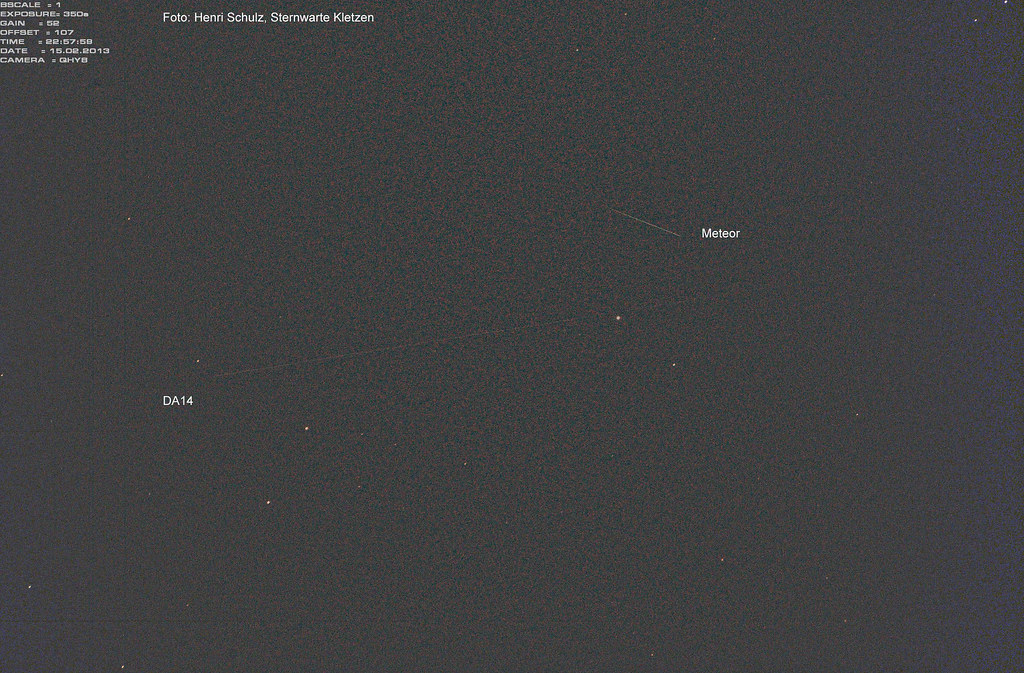
Out of sheer anger at the many useless programming work and the cloud-covered sky Mr. Schulz pushes yet in his observatory Kletzen the B´button. ...and to the surprise of all, he recorded the path of DA14 over Saxony, by cloudly sky! 24 hours later, still on the Internet only recordings from Australia can be found, but not from Germany. Although the image quality of Asterioiden snapshot is through the clouds is not particularly good, but you can clearly see the 5-minute track of DA14. To the surprise of even a small meteorite suggests itself in the image. How small is the observed part of the sky, can be seen in photo 2. The small gray rectangle in the red trace is precalculated about the size of the captured photos represent a sufficiently precise calculation of the trajectory of the meteorite after its swingby maneuver. It is a major accomplishment. A connection between the DA14 and Chelyabinsk-Meteor on the same day there is not. But there is a correlation between the randomly picked micro meteorite Leipzig and Chelyabinsk meteor. Both came from the same direction.
More on www.sternwarte-kletzen.de
|
Friday, 11 January 2013 00:00 | Written by Ralf Heckel |
There are no translations available. Moskau, 11.1.2013
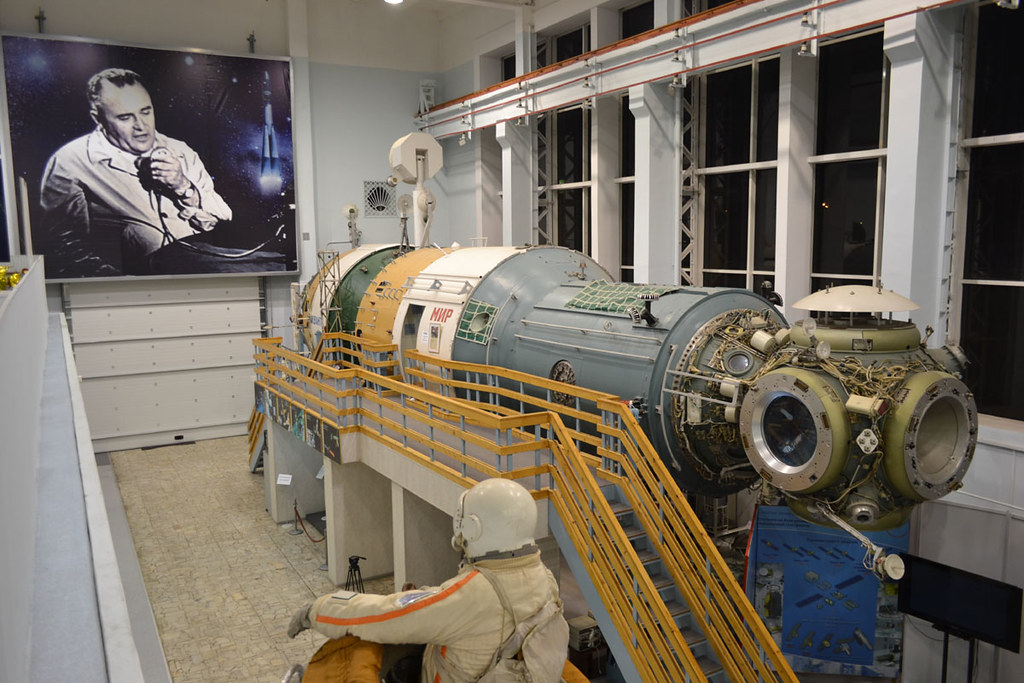
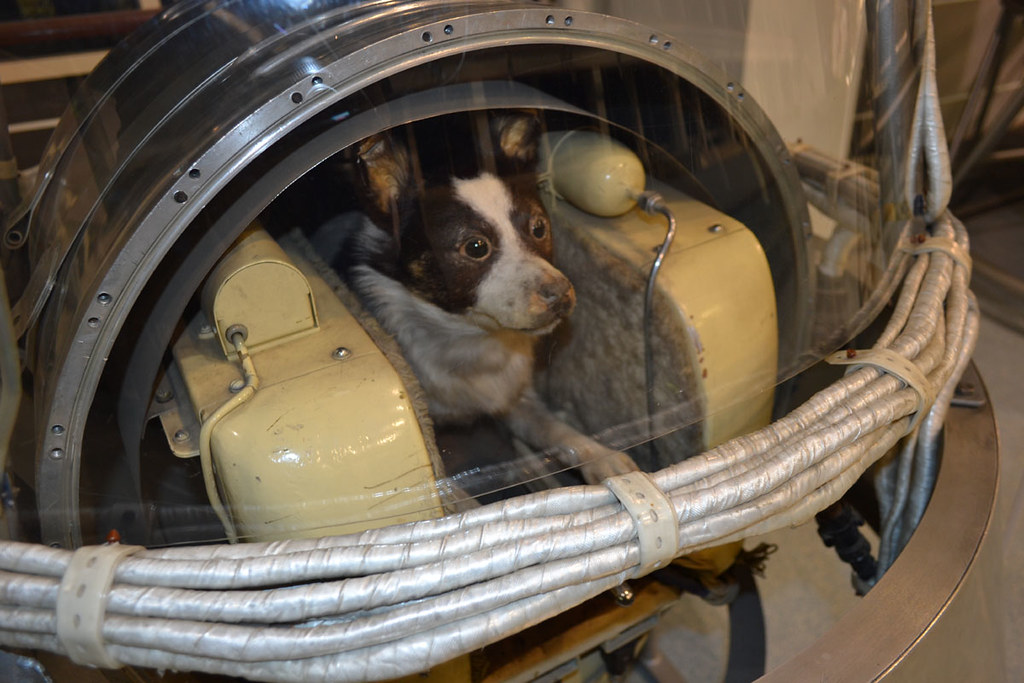
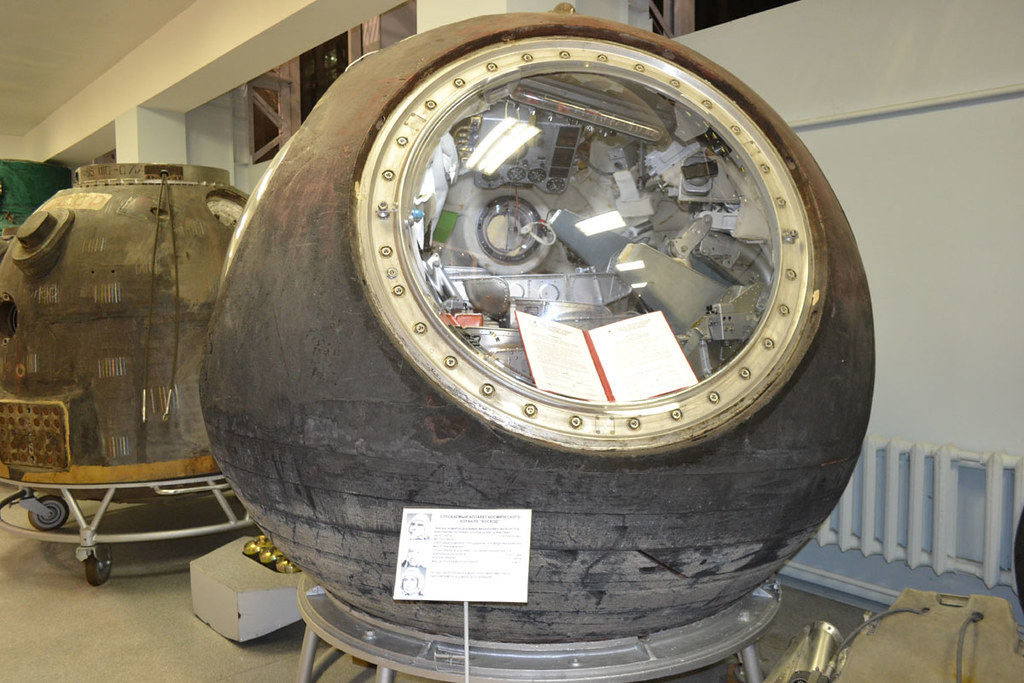
Ich habe kaum 2 Stunden geschlafen und muss schon wieder aufstehen. Die verschiedenen Zeitzonen sind Schuld daran. Deutschland ist 3 Stunden weit weg, weil Russlands Präsident Putin die Sommerzeit in seinem Land einfrieren ließ. Man lebt in Russland fortan eine Stunde weiter vom Rest der westlichen Welt entfernt – jedenfalls im Winter. Die Distanz zu Amerikas Eastern Time (ET) ist dann noch einmal 6 Stunden lang. Die Central Time in Huntsville macht dann noch einmal eine Stunde aus. Hier überall habe ich zu arbeiten. So muss man seit dem Abspalten der russischen Winterzeit immer rechnen. Es kommen damit heute 10 Stunden Distanz von Moskau nach Huntsville im Winter heraus. Früher waren es konstante 9 h. Man ist damit in Moskau im Zeitvorteil und kann News sofort am selben Tag in der USA platzieren. Man muss sich nur zwingen sie sofort fertig zu stellen. Das aber macht nichts aus. Der Tag ist wichtig und somit fällt der Start nicht schwer. Während man in der USA gerade meine News vom Tage in den Nachmittags-Nachrichten liest, breche ich in den noch dunklen Moskauer Morgen des nächsten Tages auf. Der Geburtstag vom Sputnik-Konstrukteur Koroljow ist eigentlich am 12. Januar. Aber heute hat man ihn vorgezogen, weil er sonst mit anderen Feiertagen in Russland kollidiert wäre. Erstaunlich dieses Management welches Rücksicht auf die Gäste nimmt - die ja gern auf allen Partys sein wollen! Der Bus holt uns pünktlich vor dem Hause der Koroljows ab. Seine Tochter Natalia, Roman und ich sowie noch ein Freund der Familie und eine offizielle Museums-Führerin sind da. Wir kennen uns inzwischen und haben Erlebnisse auszutauschen. Die Museums-Führerin und der Bus sind extra vom Eigner „RKK-Energia“ für uns abgestellt worden. Seit 5 Jahren sitze ich nun hier drin und kann immer auch eigene Gäste in kleiner Zahl mitbringen. Mal sind es die Familie, mal Schüler, mal Mitglieder unseres Institutes. Diesmal ist es Roman Tarasov. Etwa eine Stunde später betreten wir das Museum der Firma RKK Energia. Es ist der Raumschiff-Hersteller Russlands. Alle Raumschiffe die Menschen von Russland aus ins All transportiert und dort am Leben erhält, werden hier produziert. Es sind die Sojus-Raumschiffe und alle ISS-Module. Diese Firma wurde von Sergey Koroljow im Jahre 1948 gegründet, als er mit Zügen voller Material aus dem Erbe von Wernher von Braun´s Team aus Deutschland zurück kehrte. Damals war es eine ausgediente Panzerfabrik. Heute arbeiten hier einige der besten Wissenschaftler der Welt. Diese Firma trägt heute den Namen seines Gründers und ist die stabilste technische Säule in der Welt, wenn es um bemannte Raumfahrt seit Gagarin geht. Wir sehen uns eine Weile im Museum um und fotografieren die Exponate. Leider bleibt dieses Museum vielen Neugierigen verschlossen. Es befindet sich im Inneren der Firma deren Gelände nur mit einer Sammlung von Sonderpässen betreten werden darf. Also fühlen wir uns der „Außenwelt“ verpflichtet und nehmen jedes Mal ein Stück unserer Eindrücke mit und publizieren sie.
Nun löst sich die Gruppe auf und strömt zu den Bussen. Jetzt beginnt das, was man im Ausland als überholt betrachtet. Es werden an vielen Orten mit Gedenktafeln und Denkmälern Blumen niedergelegt. Man schreitet in einer Schlange die jeweiligen Orte ab, legt Nelken nieder und gedenkt eine Sekunde dem Vater Koroljow. Busse fahren unter polizeilichem Geleitschutz die Menge durch die Stadt. An der Kremlmauer endet die Tour nach 6 Stops.
Um 14 Uhr ist alles vorbei und die Menge löst sich auf dem Roten Platz auf. Nur eine ganz kleine Gruppe bleibt übrig und besteigt unseren Bus. Der fährt nun zu den Koroljows nach Hause. alle Fotos spaceeducation.eu
Thursday, 10 January 2013 22:03 | Written by Ralf Heckel |
There are no translations available. Korolev Stadt, 10. Januar 2012
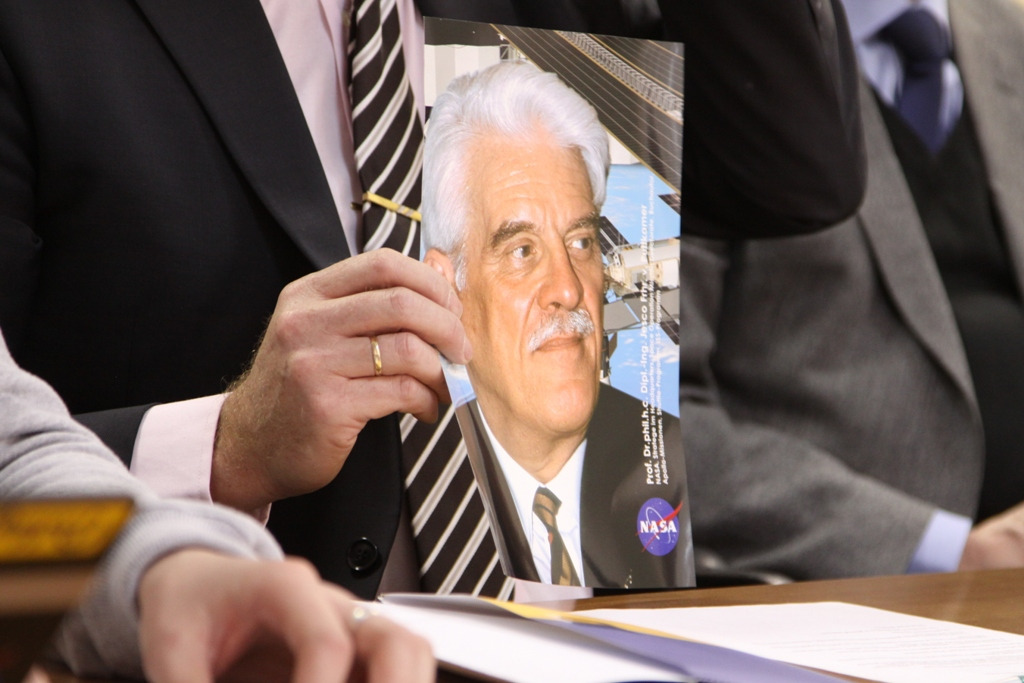
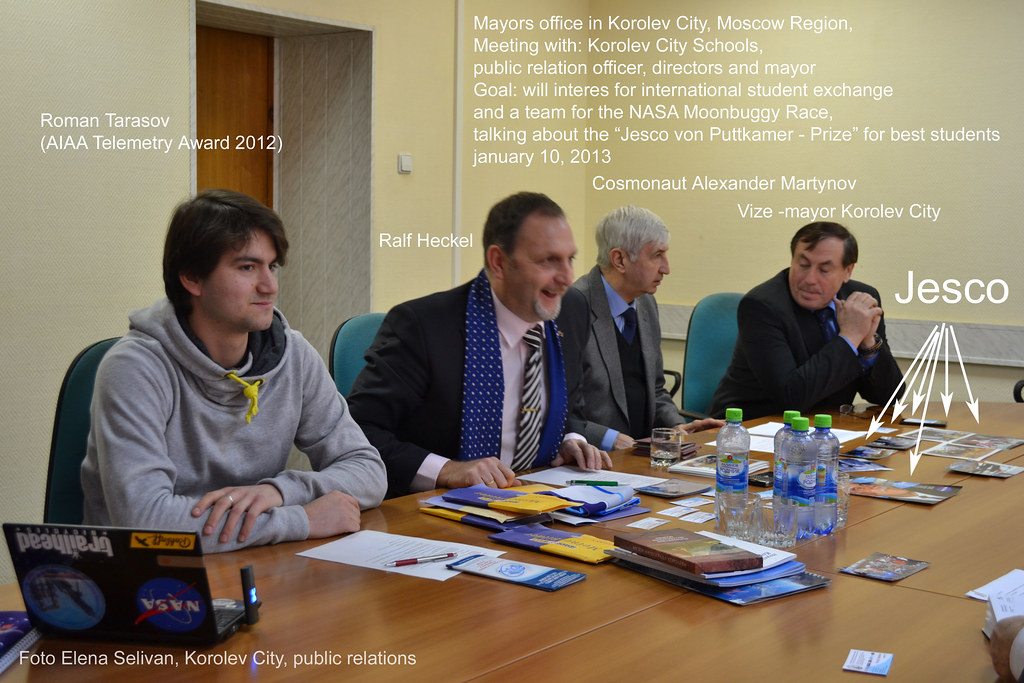
Es ist eine Idee die ich schon seit Januar 2008 vor mir her schiebe und immer wieder behutsam anstuppse. Sie entstand in einem Gespräch mit der Koroljow-Tochter Natalia in Huntsville/Alabama zum 50 Jahrestag des Explorer One. Alle waren begeistert, sogar Prof. Jesco von Puttkamer. Mein Gott, das ist jetzt 5 Jahre her! Aber ein solcher Prozess ist komplizierter als alle dachten. Es gab immer wieder Besuche und Gegenbesuche, Übergaben und gegenseitige Lippenbekenntnisse, Wahlen und Wiederwahlen. Es gibt immer wieder Gründe welche eine Seite hat um sich zu entschuldigen. Nun nach dem plötzlichen Tod des Professors von Puttkamer habe ich allein die Last auf mir, den Ideen auch Ergebnisse folgen zu lassen. Frau Prof. Koroljowa stellt sich gern mit dahinter, kann aber nicht an beiden Stellen gleichzeitig sein. Sie ist weit über 70.
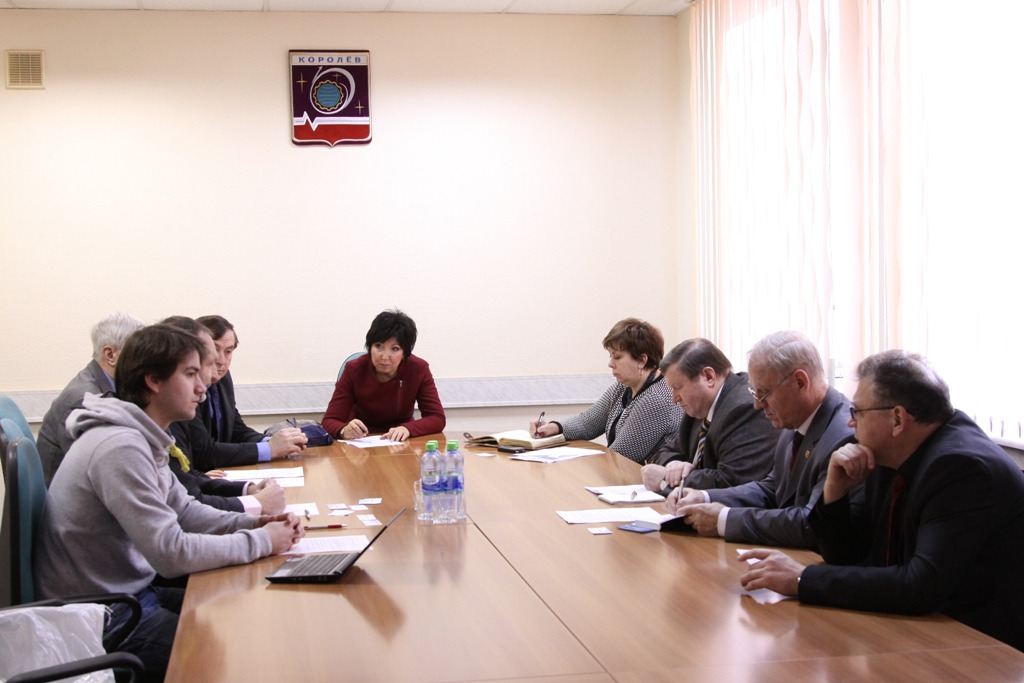
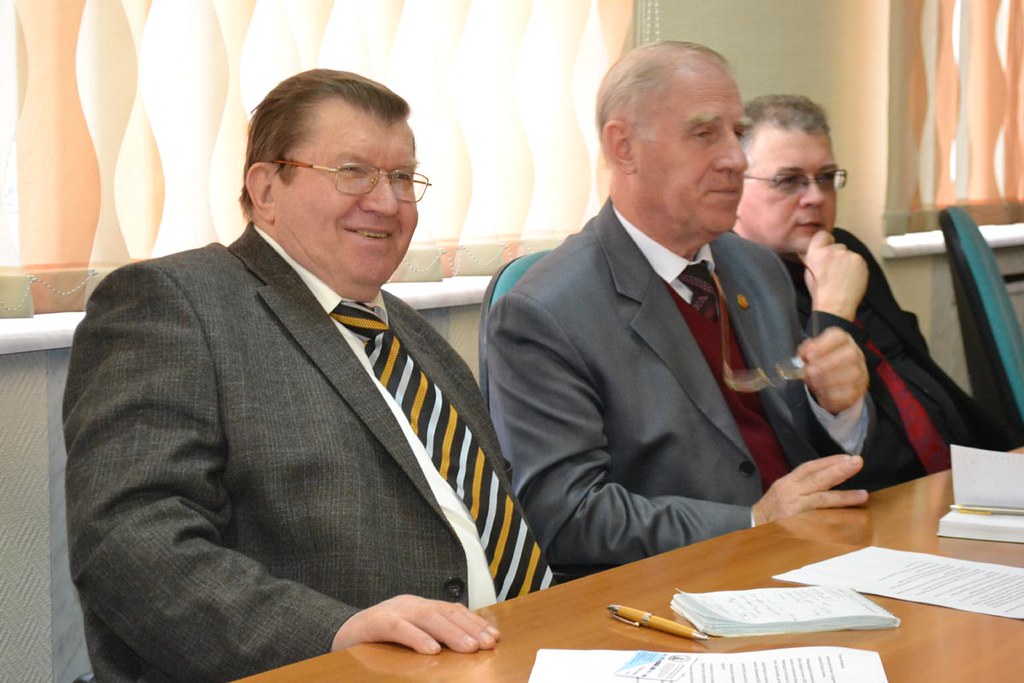
Der zweite Besuch war im Sommer 2008 beim Jugendbeauftragten Alexander Martynov. Alles schien klar und schön. Ich bekam viele Geschenke und ein Buch für die Stadtverwaltung von Huntsville. Dann auf einmal war der Bürgermeister Morosenko weg und keiner wusste wie es weitergehen sollte. Eine kopflose Stadtverwaltung in Russland ist so wie ein „Dauer-Luft-Anhalten“. Keiner traut sich was. Na wenigstens hatte ich immer Luft und versäumte keine Gelegenheit in Huntsville mit dem ebenfalls neuen Bürgermeister Tommy Battle in das Gespräch zu kommen. Dem aber ist das alles noch zu weit entfernt. Ich habe das Gefühl, dass er sich wenig darunter vorstellen kann. Also spannten wir um zum Kern. „Es ist doch egal was auf dem Papier steht, wenn man diese Brücke einfach baut.“ Schüler aus Russland müssen nach Huntsville und umgekehrt. Das in großer Zahl und mit bestechenden Ergebnissen auf dem jeweils anderen Wettbewerb. Das hat nun 4 Jahre in Anspruch genommen. In dieser Zeit habe ich versucht ein russisches Moonbuggy Team aufzubauen. Über 100 Termine zwischen der Krim, Moskau und Kaluga nahm ich wahr, bin 20.000 km mit dem Auto und Hänger durch Russland gefahren, Vorträge gehalten und habe Schüler ausgesucht. Die daran hängenden Geschichten sind pures Abenteuer. Nun sitzt Roman neben mir, ein 24 jähriger Absolvent des Moskauer Luft und Raumfahrtinstitutes. Er ist Russe, hat erfolgreich einen NASA-Wettbewerb mitgemacht, besitzt 2 NASA-Awards, war 4 Wochen mit uns in der USA, lernt deutsch, lebt inzwischen seit knapp 2 Jahren bei uns in Leipzig und ist heute meine rechte Hand. Er ist einer von zwei. Es war ein ganzes Stück Arbeit und ich bin mir heute sicher, keinen besseren Menschen an meiner Seite haben zu können. Unvorteilhafterweise hat er kein Jackett mit Schlips an, sondern einen aschgrauen Overall mit schapper Kaputze. Ob er sich bewusst ist was heute auf ihn zukommt? Der Bus verspätet ich etwas im Stau, so lassen wir kurz vor dem Ziel die Türen öffnen und laufen den Rest. Im Rathaus sind 8 Leute versammelt. Als wir 10 min später eintreten, seufzt Roman: „Oh Gott …“. Man stellt sich höflich gegenseitig vor. Da sind von rechts nach links: Herr Gennady Tyumin, Leiter des Dezernats für Informationen und Öffentlichkeit,
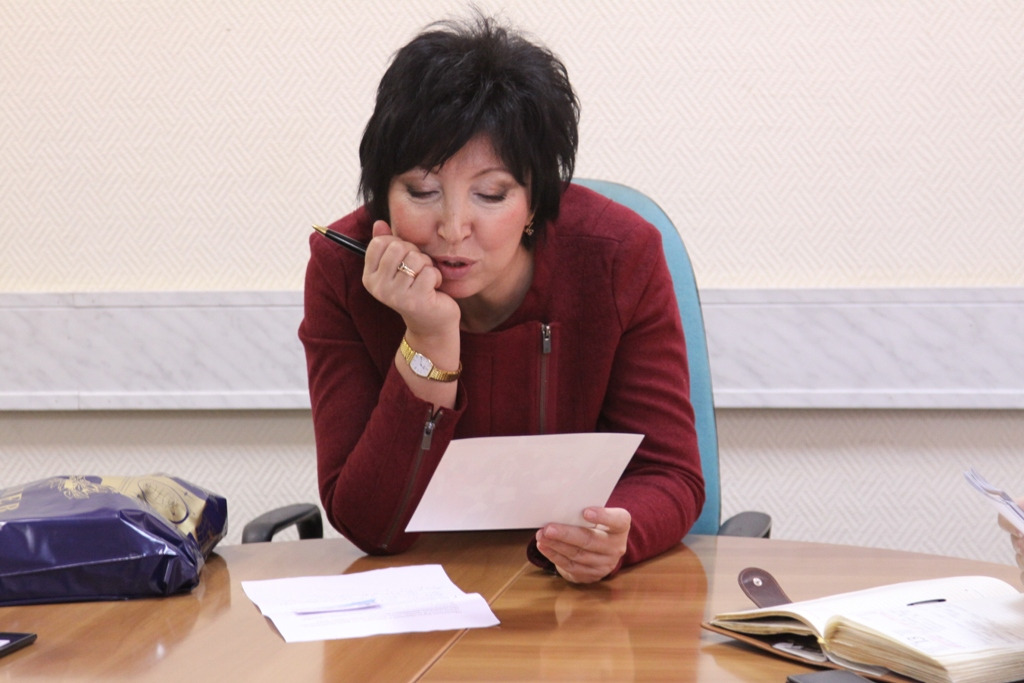
Ich stelle unser Institut und mich zunächst auf Russisch vor, schalte dann aber auf deutsch und englisch um. Bin mir so sicherer. Herr Tyumin sagt, dass er in Halle studierte. Das hilft sehr. Er und Roman übersetzen mich. Ohne Zeit zu verlieren gehen wir in das „Eingemachte“. Wir stellen unsere Vorstellungen von einem Austauschprogramm zwischen Koroljow-Stadt, Leipzig und Huntsville/Alabama vor. Man ist beeindruckt aber skeptisch. Nun kommt die alles entscheidende Frage nach den Kosten. Jetzt zahlt sich die viele Arbeit in Leipzig mit dem Space Hotel und in Huntsville mit den vielen Partnern aus. Ich gebe eine Zahl von 200 Euro pro Woche und Person für Leipzig und 400 Euro für die USA an. Man fragt erstaunt nach: „Ist das die Verpflegung?“ Ich erwidere: „Nein, das ist Hotel, Flughafentransfer, Programm, lokale Exkursionen und natürlich die Verpflegung!“
Ich fahre weiter und sage: „Natürlich hat das alles auch seinen Preis“. Nun tritt wieder Ruhe ein und ich liste auf: - Erlass der Visakosten auf russischer Seite (gebe dabei die Gesetzesgrundlage mit an) Und dann kommt es: „Ich möchte gern eine Sojus-Kapsel im Space-Museum in Huntsville haben. Die Kosten für den Transport bekommen wir in der USA zusammen.“ Stille.. Einige schienen sich verhört zu haben und fragen nach. Beratung!
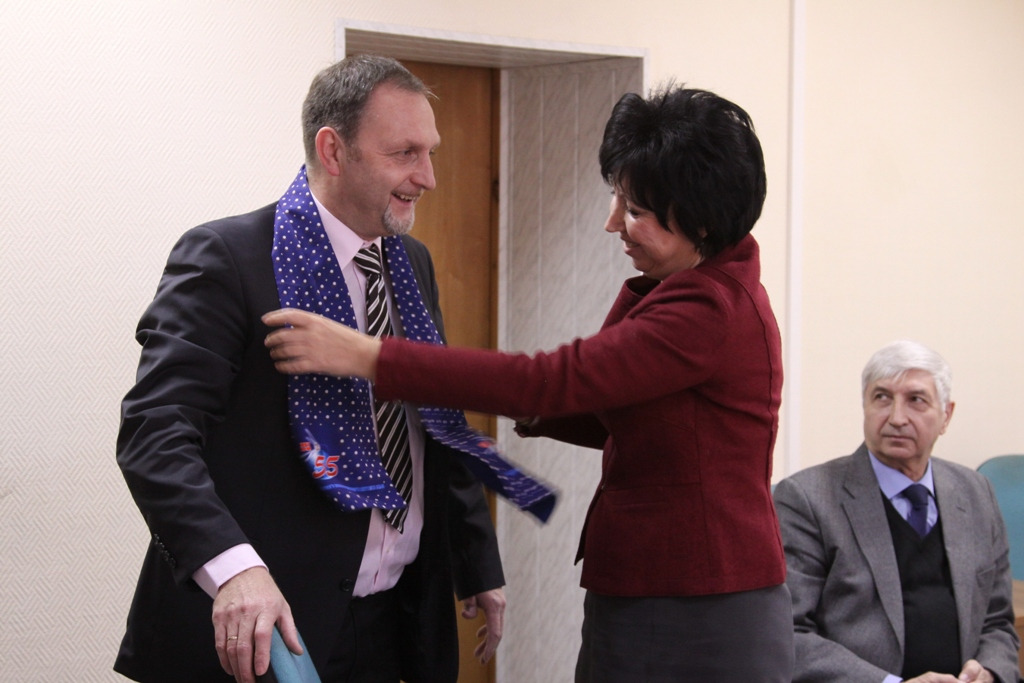
Na Perfekt! Mir ist klar, dass dies die Schallmauer der Distanz auf beiden Seiten überwindet. Romen und ich bekommen ein paar Geschenke von der "Queen der Stadt". Wir halten die Punkte alle fest und ich schließe mit dem Satz. „Meine Damen und Herren, ein Problem habe ich noch.“ Alles horcht auf. „Wir haben da auf Wunsch der Schüler einen besonderen Programmpunkt am letzten Sonntag der US-Exkursion. Ich bin mir nicht sicher ob das genehmigt werden kann. Es ist eine Betriebsbesichtigung.“
Ich antworte: „Um einen Besuch bei Jack Daniels in Tennessee.“ Alles bricht in pustendes Gelächter aus. „Keine Sorge, das geht klar – solange offiziell nur geguckt wird!“
Sunday, 06 January 2013 11:31 | Written by Administrator |
There are no translations available. Von Andreas Türke, Leipzig, den 06.01.2013 Endlich war es wieder so weit und es ging wieder nach Leipzig. Diesmal vom 4. Januar bis zum 6. Januar. Das Besondere war jedoch, dass nur Jasmin und ich an diesem Wochenende da waren, Nicolas aber nicht, da nur die kommen sollten, die in der Nähe Leipzigs wohnen. Am Abend des 4. Januar traf nach einer Woche wieder auf Jasmin, die schon mit Herrn Heckel am Arbeiten war, wobei ich mich aber auch gleich anschloss. Dieses Wochenende sollte es um die Verwaltung und Verwendung der Website gehen und wir fingen gleich an. Bald darauf gab es dann Abendbrot und danach ging es auch bald ins Bett.
Somit war dieses Wochenende auch wieder ein voller Erfolg und mich nur in meinem Vorhaben bestärkt, beim Moonbuggy Race teilzunehmen.
Sunday, 30 December 2012 19:06 |
The transparent representation and reflection of the experienced and learned serves to consolidate and classification of the acquired knowledge and new skills. In the course of one or more years such a reference of Jasmins development appears which helps especially herself. Also supporters and sponsors like to keep an eye on such, in order to take positive impact on the respective student. Now Jasmin has a week to think thoroughly about participating in the NASA competition. Jasmin also would like to get with the NASA competition a scienecepropaedeutic work for graduation. Our proposal is after an incoming discussion and a test on the CAD design the science of materials: designing, calculating and manufacturing of intelligent plastic parts on the moonbuggy to reduce the weight and increase the ride quality. For this she has a complete CAD office with a 3D plastic printer, a specialist who built a complete precision telescope made of plastic, carbon fiber, and a workshop, and contacts to the BMW factory Leipzig. from Jasmin Haack, Leipzig, 12/28/2012
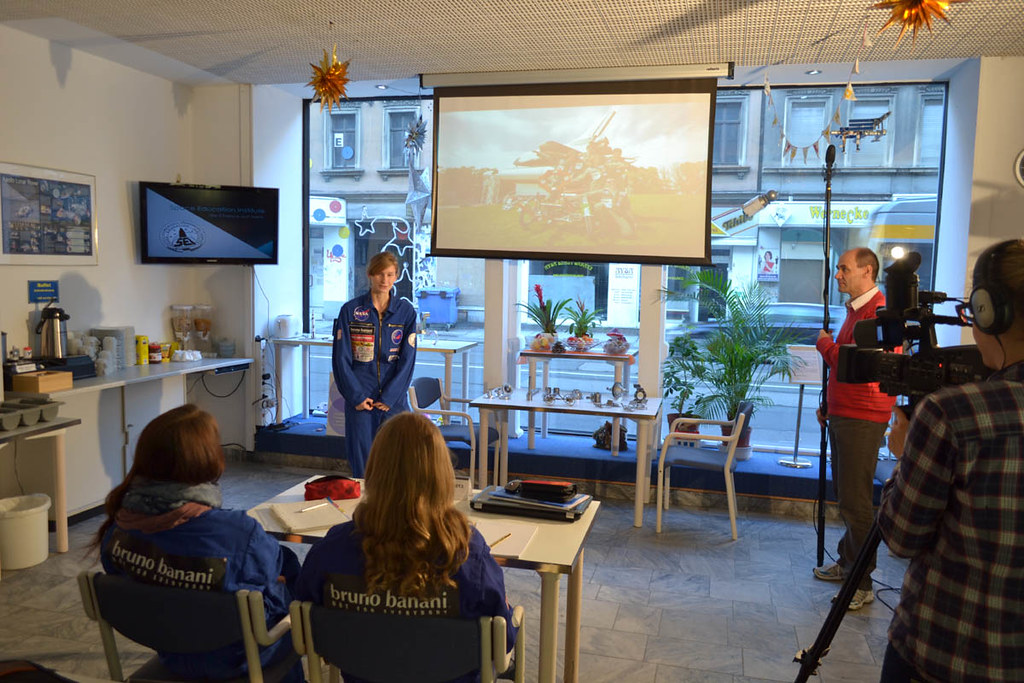
On 27th of December 2012 I went to the NASA contest. I could hardly imagine what I had to expect. First I saw Citra (an 18 year-old Indonesian student) at the reception and small children at the computer. After initial communication problems Citra explained that I was going to share the room in the fourth floor with another girl and that I was the first one. I climbed up the stairs and took the bed near the window. Then I went back into the foyer and from there into the meeting room, where Mr. Heckel told me that I was allowed to eat something from the buffet and showed me a movie about space travel. Afterwards the other students arrived, a girl and two boys, Nicolas and Andreas. To the girl, Monika, I immediately showed our room and was glad of the company. After that there was a small round of introductions and we were led around by the moonbuggy-pilot Tobias(16). Unfortunately we were not allowed to drive the Moonbuggies. It was rainy and dark.
In the preparations for diner, we helped with all, as this is also a work of us, because in the U.S., we have to manage everything on our own. In a large group we ate and finally watched a film. We went to our rooms. Monika and I were joking much, so we could get to know us better and better. My roommate and I talked a lot and slept around 11.00 pm. 7.00 am I got up to help making breakfast. After that I woke Monika so we could have breakfast together, completely relaxed, because no other breakfast guests were present.
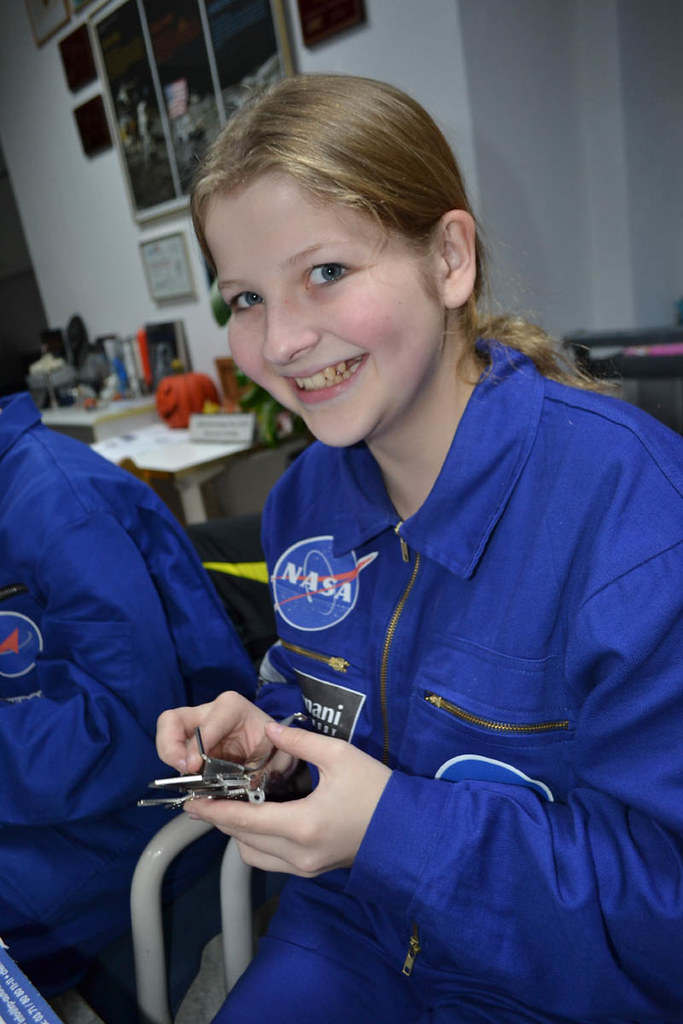
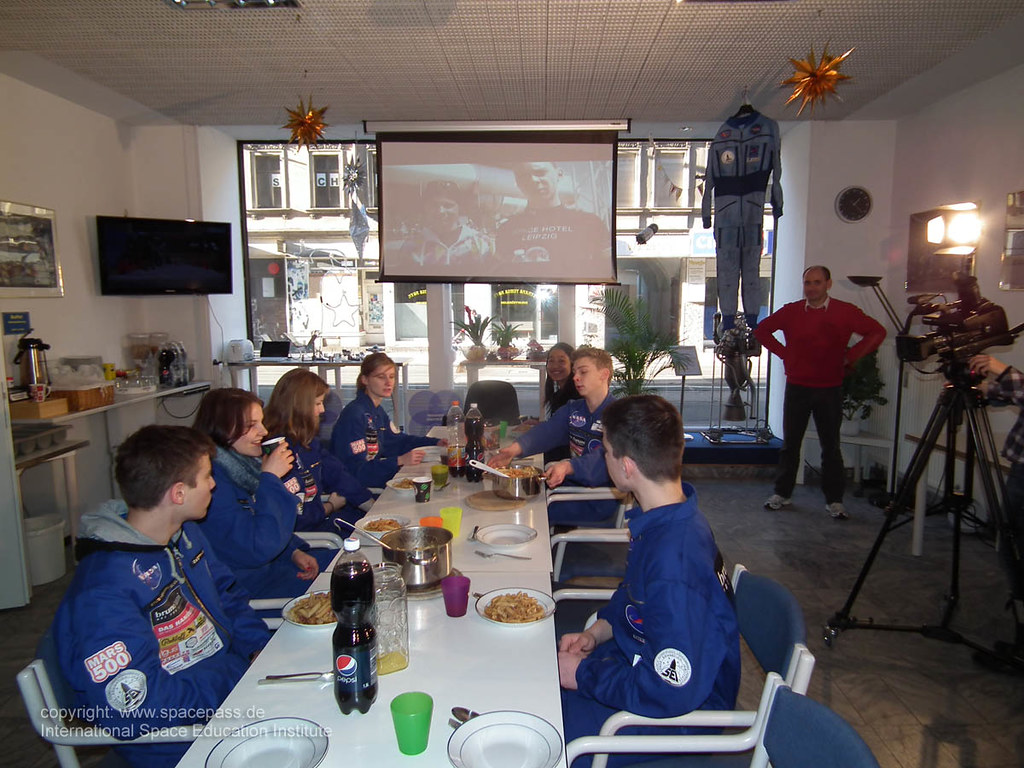
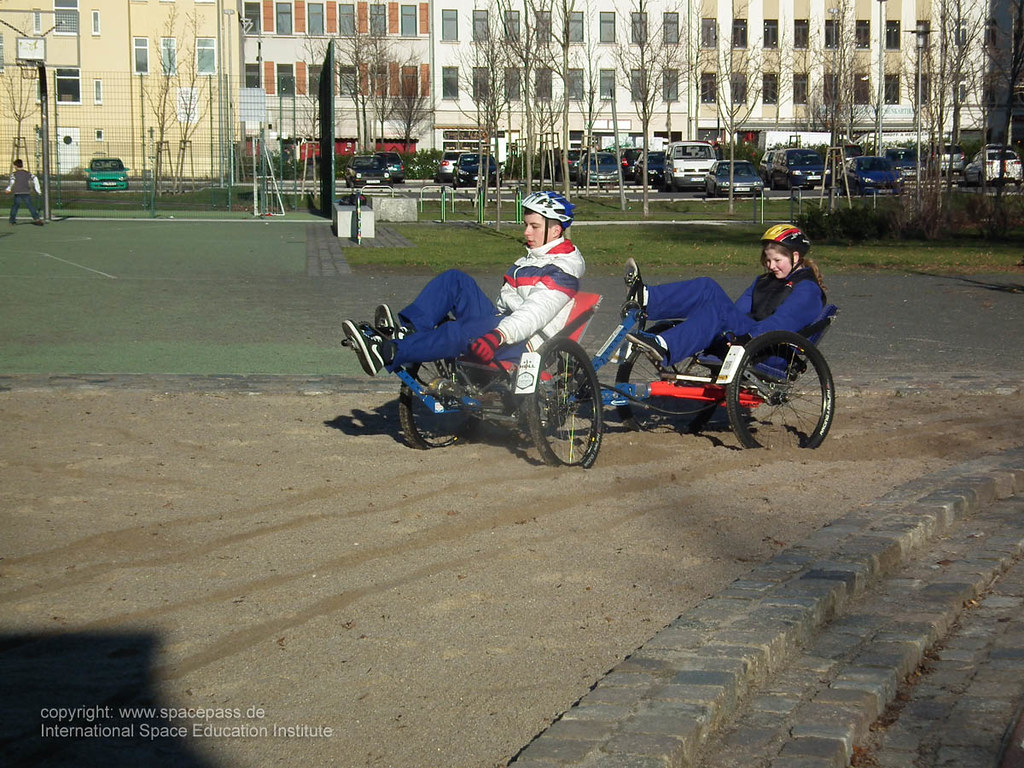
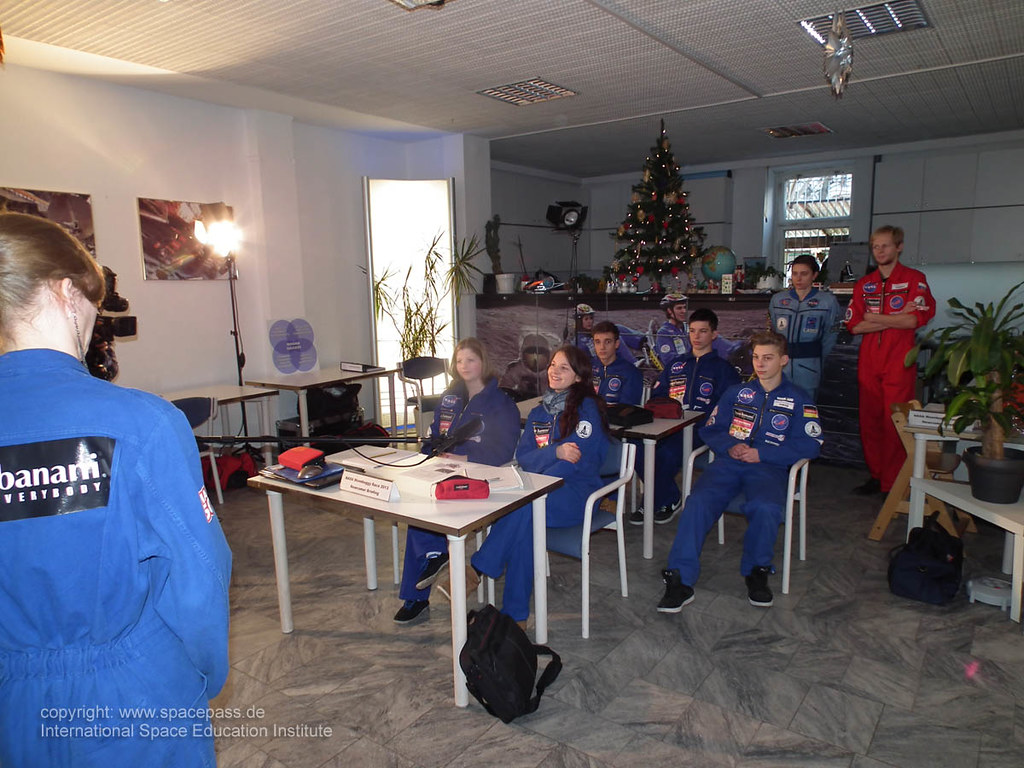
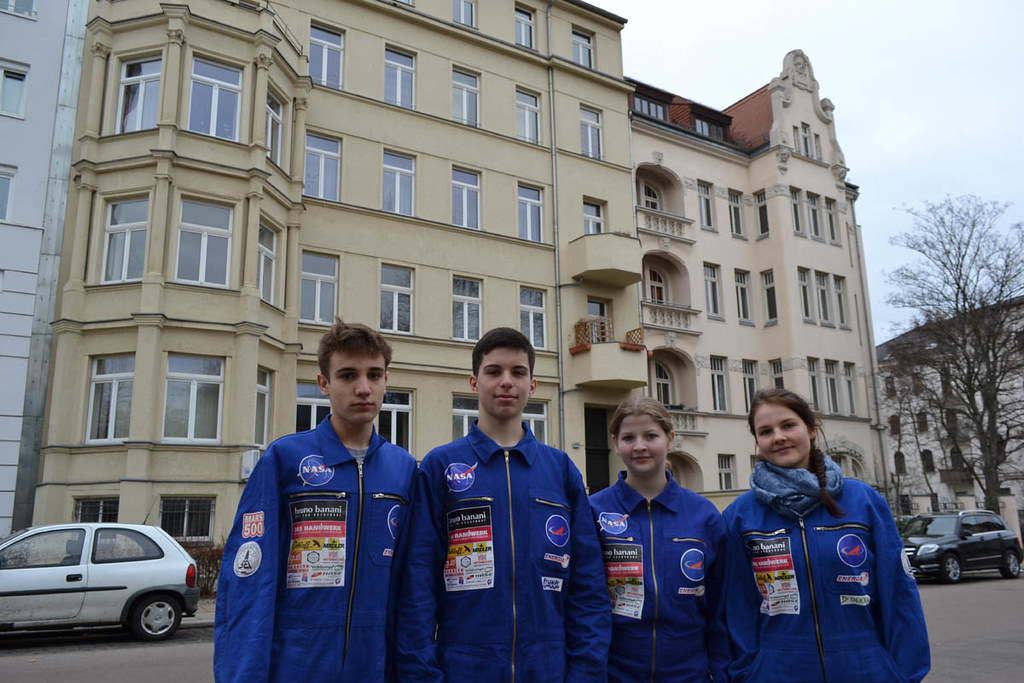
After breakfast we got a lecture about the institute and the moonbuggy competitions. The experienced moonbuggy-pilot Nadine (18) did that very impressive. We received overalls in space look, very convenient, comfortable, nice color and warm. The only problem was the size. Finally it was time. We were allowed to drive the buggies a lap around the test track. First alone and then as a team we explored the way. Short jumps on the hills were our main activity. After a short time we drove through sand, on time, down stairs, up stairs and down hills, faster and with less fear.. Too soon we had to leave the area because it was time to eat lunch. While we watched several videos of races, we relished the pasta with Indonesian sauce. Everybody took part in this meal, so that it became a playful table society. Thereafter we four were invidually interviewed about our motives in this competition, our aims and our future. Meanwhile the others played table football in the foyer. On the second day we all helped making the breakfast and ate in a cheerful round. Afterwards, we discussed what to do next, since most of our group did not come from the vicinity of Leipzig. Our duties home would be: finding sponsors for money and for components, to do advertisement, and to make placements.
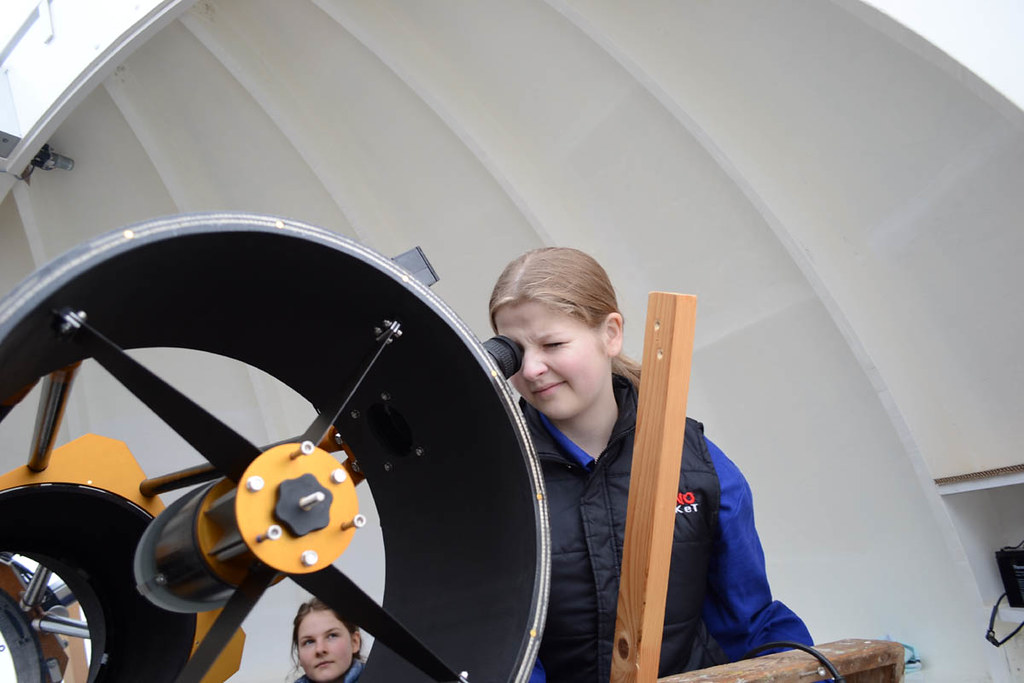
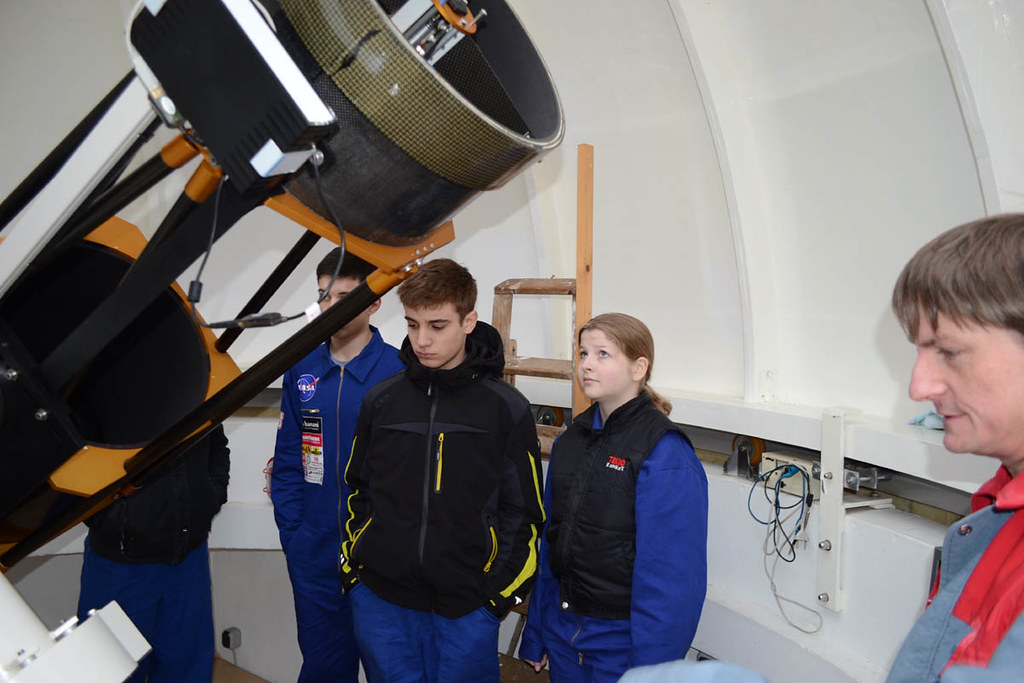
Because the others still had no real idea of Leipzig, we went by car a round through the city and visited a friend of Mr.. Heckel, who had built himself an observatory made of plastic. Henri Schulz has realized his dream in Krostiz, in a small garage producing everything for the observatory, even the telescope, by himself. He explained everything and we were allowed to take a look through the telescope. We were able to look at his workshop, where he had built all the parts of his observatory. I was thrilled. Because I also like to do handcraft work, this was more or less a paradise. My task for the team was to design a bumper for our buggy, but I wanted lso to be involved in the brackets for the fenders. Here were the ideal conditions to create something great. Unfortunately we parted quite early, because the other students should learn something of the history of Leipzig. Finally Leipzig is a cultural important city with an exciting story and silhouette.
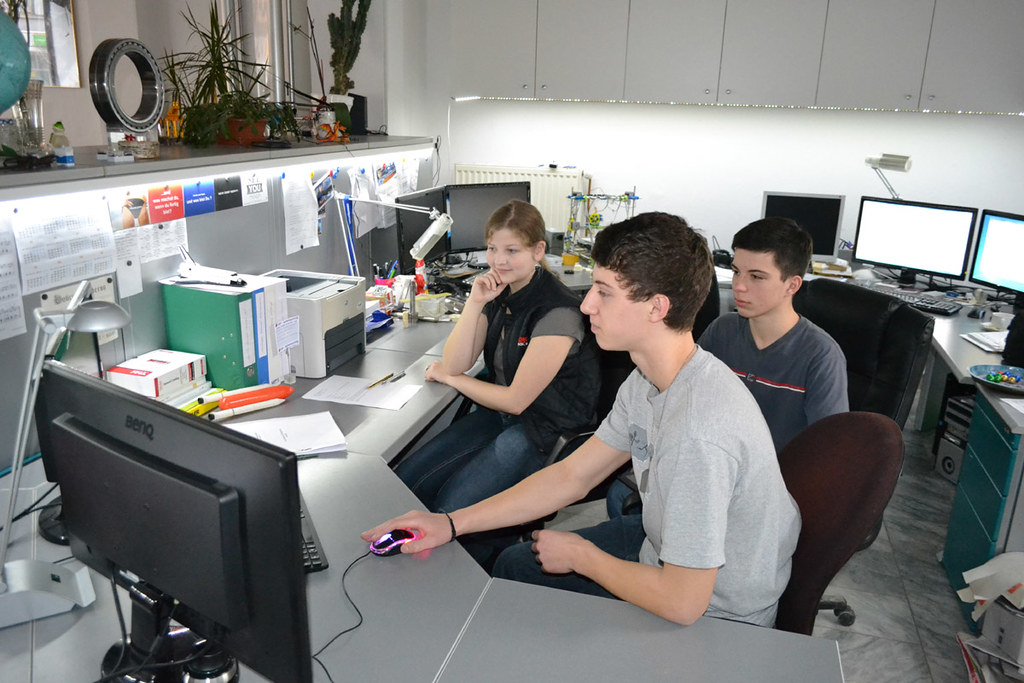
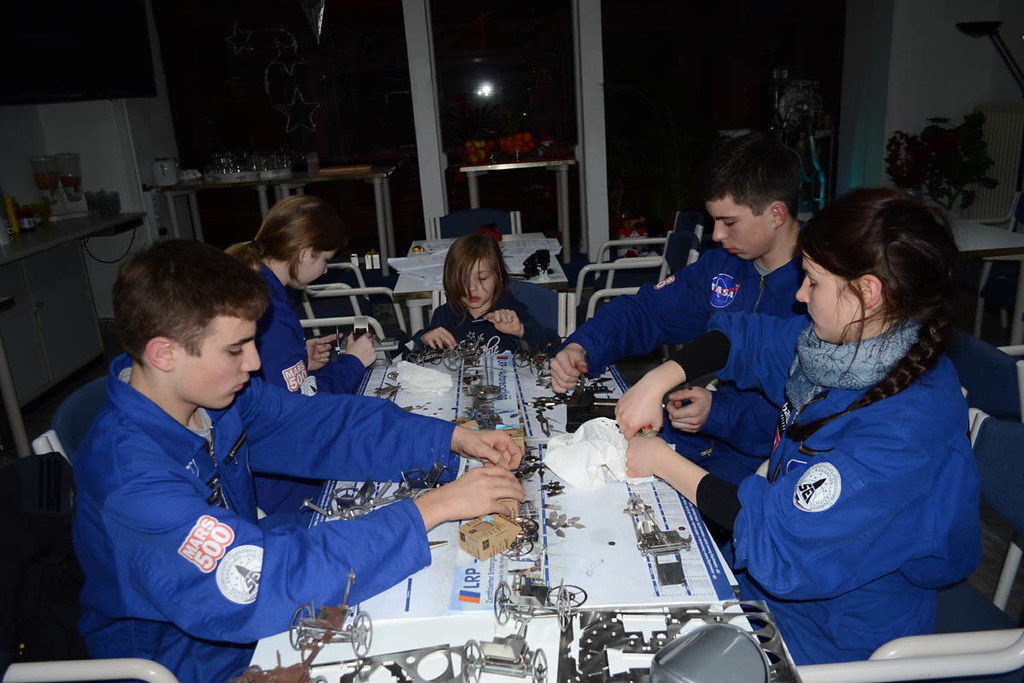
We also visited the birthplace of Dr. Jesco von Puttkamer, who was the longest serving employee of NASA and a good friend of our team leader. He unfortunately died on Christmas of influenza. The story of his youth touched us very much Me it made proud because someone like him, who had to endure a lot of harassment by the Nazis had achieved something in NASA. And that someone was born in Leipzig, my hometown. Then we went back to have lunch. Nicolas and I had the task to design different Moonbuggy parts in 3D on the computers under the guidance of Evgeniy with the CAD program, of course, according to technical drawings. Evgeniy Zakutin is a Russian aviation and aerospace engineer from Moscow, with Tobias and his help, we finally managed to create the parts. Proud we sat down to the others to build a small Moonbuggy model.
The next day, Nicolas and I completed the rest of the paperwork, while Andreas and Monika were working on the PC. Much too early our ways parted, to begin the journey home. The greater the joy of the next meeting at NASA will be. |